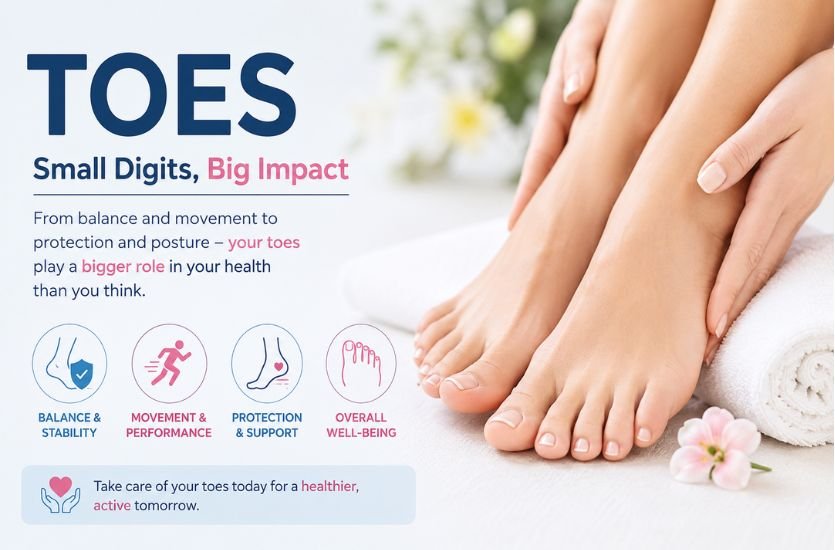

Every step you take depends on a remarkable part of your body that rarely gets the attention it deserves. Whether you’re walking across your home, running a marathon, climbing stairs, or simply standing in line, your toes are constantly working behind the scenes to keep you balanced, stable, and moving comfortably. Although they appear small compared to other body parts, toes play a critical role in everyday movement and overall foot health. When something goes wrong with them, even a minor injury can make simple daily activities surprisingly difficult.
Understanding how toes work, what problems can affect them, and how to care for them properly can help prevent pain and improve mobility throughout your life. From athletes and hikers to office workers and older adults, everyone benefits from learning more about these essential parts of the body.
Also Read: What Is Tri Tip? How to Cook Perfectly Tender, Juicy, Flavorful Beef
What Are Toes?
Toes are the five small digits located at the front of each foot. Humans have a total of ten toes, five on each foot, and they work together with the bones, muscles, tendons, ligaments, and nerves of the feet to support movement and maintain balance. Although toes occupy only a small portion of the body, they are involved in nearly every activity that requires standing, walking, running, jumping, or changing direction.
Each toe contributes differently to foot function. The big toe, also known as the hallux, is the strongest and most important because it provides much of the force needed to push the body forward while walking or running. The remaining four toes assist with stability, balance, and weight distribution, ensuring that movement remains smooth and controlled.
Healthy toes allow people to move naturally without discomfort, while injured or deformed toes can significantly affect posture, walking patterns, and overall quality of life.
Anatomy of Toes
The anatomy of the toes is more complex than many people realize. Each foot contains fourteen toe bones known as phalanges. The big toe has only two bones, called the proximal and distal phalanges, while each of the other four toes contains three bones known as the proximal, middle, and distal phalanges.
These bones connect through small joints that allow the toes to bend and flex during movement. Surrounding the joints are ligaments that hold the bones together and tendons that connect muscles to the bones, allowing the toes to move when the muscles contract. Numerous nerves travel through the feet and toes, providing sensation such as touch, temperature, and pain.
Blood vessels continuously deliver oxygen and nutrients to the tissues of the toes, supporting healthy function and healing after injury. The skin covering the toes also acts as a protective barrier against infection and environmental damage.
All of these structures work together to create flexibility, strength, and stability that support everyday activities.
Names of the Toes
Although many people simply refer to their toes by number, each one has a specific anatomical identity. The first toe is called the hallux or big toe and serves as the primary source of propulsion during walking. The second toe is often the longest toe in many individuals, while the third toe sits in the center of the foot. The fourth toe contributes to balance alongside the outer toes, and the fifth toe, commonly known as the little toe or pinky toe, helps stabilize the outer edge of the foot.
Despite their differences in size and strength, every toe has an important role in maintaining healthy movement.
Why Toes Are So Important
Many people underestimate the importance of their toes until pain or injury develops. Without properly functioning toes, everyday movements become much more difficult. Walking efficiently requires precise coordination between the toes, foot, ankle, and leg muscles.
The toes help distribute body weight evenly across the foot, preventing excessive pressure from being placed on a single area. They also provide additional grip on uneven surfaces, making activities such as hiking, climbing, or exercising safer.
When you walk, your body naturally shifts weight toward the front of the foot. At the final stage of each step, the big toe pushes against the ground to propel the body forward. Without this action, walking becomes slower, less stable, and more tiring.
Toes also improve balance while standing still. Small adjustments made by the toes help prevent falls, particularly on uneven ground or slippery surfaces. This function becomes even more important as people age because maintaining balance reduces the risk of injury.
Functions of Toes
The primary function of the toes is to support balance and movement. They help stabilize the body while standing and walking, ensuring that weight is distributed efficiently across the feet.
Toes also absorb shock generated during walking, running, and jumping. Each step creates impact forces that travel through the lower limbs. Healthy toes help reduce these forces, protecting the joints of the feet, ankles, knees, hips, and even the lower back.
Another important function involves maintaining posture. Small adjustments made by the toes help keep the body aligned while standing for long periods. Athletes especially rely on strong toes to improve speed, agility, and coordination during sports that require rapid changes in direction.
The toes additionally provide sensory feedback. Thousands of nerve endings allow the brain to recognize surface textures, pressure, and changes in balance almost instantly, enabling quick adjustments that prevent falls.
Common Toe Conditions
Although toes are strong and resilient, they are vulnerable to various injuries and medical conditions. Some develop gradually due to pressure and poor footwear, while others occur suddenly after trauma or sports activities.
Ingrown toenails are among the most common toe problems. They develop when the edge of a toenail grows into the surrounding skin instead of outward. This often causes redness, swelling, pain, and sometimes infection. Improper nail trimming and wearing tight shoes are common contributing factors.
Bunions are another widespread condition. A bunion appears as a bony bump at the base of the big toe, causing the toe to gradually angle toward the second toe. Genetics, arthritis, and years of wearing narrow footwear can all contribute to bunion formation.
Hammertoe occurs when one of the smaller toes bends permanently at its middle joint, giving it a hammer-like appearance. At first the toe may remain flexible, but over time it can become rigid and painful if left untreated.
Claw toe and mallet toe are similar deformities that affect different joints of the toes. These conditions often develop due to muscle imbalances, nerve disorders, diabetes, or poorly fitting shoes.
Athletes frequently experience turf toe, which is a sprain of the big toe joint caused by excessive upward bending during sports. Although it sounds minor, turf toe can make walking extremely painful and may require several weeks of recovery.
Broken toes are also common injuries resulting from dropping heavy objects, accidental impacts, or sports collisions. Depending on the severity of the fracture, treatment may range from rest and protective footwear to surgery.
Fungal infections such as athlete’s foot often affect the skin between the toes. These infections thrive in warm, moist environments and commonly cause itching, burning, redness, and cracked skin.
Gout frequently targets the big toe joint. This form of arthritis develops when uric acid crystals accumulate inside the joint, producing sudden episodes of severe pain, swelling, redness, and warmth that often begin overnight.
Causes of Toe Problems
Toe problems can develop for many different reasons, ranging from everyday habits to underlying medical conditions. One of the most common causes is wearing shoes that are too tight, too narrow, or poorly fitted. Shoes that squeeze the toes together create excessive pressure, increasing the risk of bunions, hammertoes, corns, calluses, and ingrown toenails. High-heeled shoes can also force the body’s weight onto the front of the foot, placing additional stress on the toes over time.
Injuries are another leading cause of toe pain. Stubbing a toe against furniture, dropping a heavy object on the foot, twisting awkwardly during sports, or suffering repetitive impact from running can all damage the bones, joints, ligaments, or tendons of the toes. Even a seemingly minor injury can lead to swelling and discomfort that affects walking for days or weeks.
Certain medical conditions also increase the likelihood of developing toe disorders. Arthritis can cause inflammation and stiffness in the toe joints, while gout often produces sudden attacks of severe pain in the big toe. Diabetes may damage nerves and reduce blood circulation to the feet, making small cuts or infections more difficult to heal. Poor circulation caused by vascular disease can also affect the health of the toes, especially in older adults.
Age naturally contributes to changes in the feet. As people grow older, the muscles and ligaments supporting the toes may weaken, making deformities more likely to develop. Genetics also plays an important role, as some individuals inherit foot structures that make them more susceptible to bunions or other toe abnormalities.
Poor foot hygiene can encourage fungal and bacterial infections, particularly when feet remain damp for long periods. Walking barefoot in public showers, locker rooms, or swimming pool areas may increase the risk of athlete’s foot and other contagious infections.
Symptoms of Toe Disorders
The symptoms of toe problems vary depending on the underlying condition, but many disorders share several common warning signs. Pain is usually the first symptom people notice. The discomfort may appear suddenly after an injury or develop gradually over weeks or months due to chronic pressure or inflammation.
Swelling is another frequent symptom and may affect a single toe or multiple toes at the same time. Inflammatory conditions such as gout or infections often cause noticeable redness and warmth around the affected area. Bruising may occur after fractures or other traumatic injuries.
Many people experience stiffness that limits the ability to bend or straighten the toes normally. As certain deformities progress, the affected toes may become permanently bent, making it difficult to wear comfortable footwear.
Numbness or tingling can occur when nerves become compressed or damaged. These sensations are particularly common among people with diabetes, nerve disorders, or poorly fitting shoes that place continuous pressure on the toes.
Changes in the appearance of the skin or toenails should also be taken seriously. Thickened nails, discoloration, foul odor, peeling skin, or drainage may indicate fungal or bacterial infections requiring medical treatment.
Difficulty walking is often one of the most significant consequences of toe disorders. Because the toes play such an important role in balance and movement, even a relatively minor problem can affect the way a person walks, potentially leading to pain in the ankles, knees, hips, or lower back.
How Toe Problems Are Diagnosed
Diagnosing toe conditions usually begins with a detailed medical history and physical examination. A healthcare provider will ask about the location of the pain, recent injuries, daily activities, footwear habits, and any existing medical conditions that may affect foot health.
During the examination, the doctor carefully observes the alignment of the toes, checks for swelling or deformities, evaluates joint movement, and gently presses different areas to identify tenderness. The skin and toenails are also examined for signs of infection or circulation problems.
Imaging tests are commonly used when fractures, arthritis, or structural abnormalities are suspected. X-rays provide detailed images of the bones and joints, while MRI scans can reveal injuries involving tendons, ligaments, cartilage, or other soft tissues. Ultrasound may also help evaluate certain tendon injuries or fluid collections.
Blood tests are sometimes recommended if gout, autoimmune arthritis, or infection is suspected. For fungal infections, small samples from the nail or skin may be collected and examined in a laboratory to confirm the diagnosis before treatment begins.
Early diagnosis is important because many toe conditions become more difficult to treat once permanent joint damage or deformity develops.
Treatment Options for Toe Problems
Treatment depends on the specific condition, its severity, and the patient’s overall health. Many mild toe problems improve with conservative care, while more advanced conditions may require specialized medical treatment.
Rest is often the first step after an injury. Reducing activities that place stress on the affected toe allows damaged tissues to heal naturally. Applying ice for short periods during the first forty-eight hours helps reduce swelling and pain, while elevating the foot above heart level encourages excess fluid to drain away.
Supportive footwear plays a major role in recovery. Shoes with a wide toe box reduce pressure on painful areas and allow the toes to move more naturally. Orthotic inserts may also help improve foot alignment and distribute body weight more evenly.
Over-the-counter pain relievers and anti-inflammatory medications are frequently used to manage discomfort associated with arthritis, sprains, or minor injuries. For infections, doctors may prescribe antifungal or antibiotic medications depending on the cause.
Physical therapy can strengthen the muscles of the feet and improve flexibility, reducing stress on the toes during movement. Gentle stretching exercises may help maintain joint mobility and slow the progression of certain deformities.
Some conditions require specialized devices such as toe splints, cushions, or spacers that help realign the toes and relieve pressure. These devices are especially useful during the early stages of bunions or hammertoes.
When conservative treatments fail or deformities become severe, surgery may be recommended. Surgical procedures can remove bunions, repair fractures, straighten bent toes, or correct damaged joints. Modern surgical techniques often allow patients to regain function with appropriate rehabilitation and follow-up care.
Prompt treatment not only relieves pain but also reduces the risk of long-term complications that could interfere with mobility and daily life.
How to Prevent Toe Problems
Taking care of your toes is one of the easiest ways to protect your overall foot health. Many common toe conditions can be prevented through simple daily habits that reduce pressure, improve hygiene, and support healthy movement.
Choosing properly fitted shoes is one of the most effective preventive measures. Shoes should provide enough room for the toes to move freely without being squeezed together. A wide toe box helps reduce friction and pressure, lowering the risk of bunions, hammertoes, corns, and ingrown toenails. Shoes should also provide good arch support and cushioning to absorb shock during walking and running.
Keeping toenails trimmed correctly is equally important. Nails should be cut straight across rather than rounded at the corners to reduce the likelihood of ingrown toenails. Using clean nail clippers and avoiding cutting nails too short helps prevent injuries and infections.
Maintaining proper foot hygiene also plays a significant role in prevention. Washing the feet daily with soap and water removes dirt, bacteria, and sweat that can contribute to infections. Drying carefully between the toes is essential because moisture creates an ideal environment for fungal growth. Wearing clean, moisture-wicking socks and changing them regularly further reduces the risk of athlete’s foot.
People who participate in sports or spend long hours standing should inspect their feet regularly for signs of blisters, redness, swelling, or unusual pain. Detecting problems early often prevents them from becoming more serious. Individuals with diabetes should pay especially close attention to foot care since reduced sensation may allow injuries to go unnoticed.
Maintaining a healthy body weight can also reduce stress on the feet and toes. Excess weight increases pressure on the joints and soft tissues, making pain and deformities more likely over time.
Daily Toe Care Tips
Healthy toes require consistent attention rather than occasional care. Developing a daily routine helps preserve flexibility, circulation, and comfort throughout life.
Begin each day by wearing shoes that fit properly and match your activities. Athletic shoes are ideal for exercise, while supportive walking shoes are preferable for extended periods of standing or walking. Avoid wearing high heels or narrow shoes for prolonged periods, as these can gradually change the alignment of the toes.
Moisturizing the skin helps prevent dryness and cracking, particularly during colder months. However, moisturizer should not be applied between the toes because excessive moisture in these areas may encourage fungal infections.
Simple stretching exercises improve flexibility and maintain joint mobility. Spreading the toes apart, gently curling them, and picking up small objects with the toes strengthen the muscles that support balance and coordination. Rolling the foot over a small massage ball or frozen water bottle can also relieve tension after a long day.
Walking barefoot indoors on safe, clean surfaces may strengthen the small muscles of the feet, although supportive footwear remains important outdoors or on rough terrain.
Toe Exercises for Strength and Flexibility
Like any other part of the body, the toes benefit from regular exercise. Strong toe muscles improve balance, stability, and athletic performance while reducing the likelihood of certain injuries.
One simple exercise involves spreading the toes apart as wide as possible, holding the position for several seconds before relaxing. Repeating this movement several times strengthens the muscles responsible for controlling toe movement.
Another effective exercise is the towel curl. Place a small towel flat on the floor and use only your toes to pull it toward you. This movement strengthens the muscles underneath the foot and improves grip.
Marble pickups are another popular exercise. Place several marbles on the floor and use your toes to lift each one into a small container. This activity enhances coordination while strengthening the toes and foot muscles.
Calf stretches and ankle mobility exercises also benefit the toes because all these structures work together during walking and running. Improving flexibility throughout the lower leg helps reduce unnecessary stress on the front of the foot.
When Should You See a Doctor?
Many minor toe injuries improve with rest and home care, but certain symptoms require prompt medical evaluation. Persistent pain lasting more than a few days, severe swelling, obvious deformity, inability to bear weight, or signs of infection such as pus, increasing redness, or fever should never be ignored.
People with diabetes, poor circulation, or weakened immune systems should seek medical advice even for small cuts or blisters because these injuries may heal slowly and become infected.
Sudden, intense pain in the big toe accompanied by redness and swelling could indicate gout, while numbness or loss of sensation may suggest nerve damage that requires professional assessment.
Early diagnosis and treatment often prevent long-term complications and help restore normal foot function more quickly.
Interesting Facts About Toes
Although they receive little attention compared with other parts of the body, toes are fascinating from both anatomical and evolutionary perspectives. Humans have ten toes containing a total of twenty-eight phalanges, making them an important part of the skeletal system. Nearly one-quarter of all the bones in the human body are located in the feet, demonstrating just how structurally complex they are.
The big toe generates much of the force used to push the body forward during walking, making it one of the most important structures for efficient movement. Many people naturally have a second toe that is longer than the big toe, a variation commonly referred to as Morton’s toe or Greek foot. Despite differences in toe length and shape, these variations are usually normal and rarely affect overall foot function.
Scientists believe that human toes evolved to provide improved balance and efficient upright walking. Unlike many primates that use their toes for grasping, human toes are aligned to maximize stability and endurance during long-distance movement.
Frequently Asked Questions
Why do my toes hurt when I walk?
Toe pain while walking may result from poorly fitting shoes, bunions, arthritis, stress fractures, nerve compression, or injuries. Persistent pain should be evaluated by a healthcare professional.
How many bones are in the toes?
Each foot contains fourteen toe bones called phalanges. The big toe has two bones, while each of the other four toes has three.
Can toe deformities be corrected?
Many mild deformities improve with supportive footwear, physical therapy, toe spacers, and orthotics. Severe cases may require surgical correction.
What causes numb toes?
Numbness may occur because of nerve compression, diabetes, poor circulation, injuries, or wearing shoes that are too tight.
How can I keep my toes healthy?
Wearing comfortable shoes, trimming nails properly, practicing good hygiene, exercising the feet regularly, and seeking prompt treatment for injuries all contribute to healthy toes.
Conclusion
Your toes may be small, but their contribution to everyday life is enormous. They support balance, absorb shock, maintain posture, and generate the power needed for walking, running, and countless other activities. Because they perform these essential tasks every day, even minor toe problems can significantly affect comfort and mobility.
Understanding toe anatomy, recognizing early signs of common conditions, and adopting healthy foot care habits can go a long way toward preventing pain and preserving mobility. Simple steps such as choosing well-fitting shoes, maintaining proper hygiene, exercising the feet, and addressing problems before they worsen can help keep your toes strong and healthy for years to come.
Whether you’re an athlete striving for peak performance, someone who spends long hours on your feet, or simply looking to improve your overall health, giving your toes the attention they deserve is a worthwhile investment. Healthy toes form the foundation of healthy movement, allowing you to stay active, independent, and comfortable throughout every stage of life.