303 Area Code: Location, History, Cities Covered, Time Zone & Everything You Need to Know

A single phone number can reveal much more than just who is calling. It can hint at a person’s location, connect businesses with local customers, and even reflect decades of telecommunications history. Among the many area codes in the United States, the 303 area code holds a special place because it is one of the country’s original telephone area codes and has become closely associated with Denver and the surrounding communities of Colorado. Whether you have received a call from a 303 number, are planning to move to Colorado, or simply want to understand the significance of this iconic area code, learning its history and purpose provides fascinating insight into how the American telephone system has evolved.
Also Read: English Breakfast Tea
What Is the 303 Area Code?
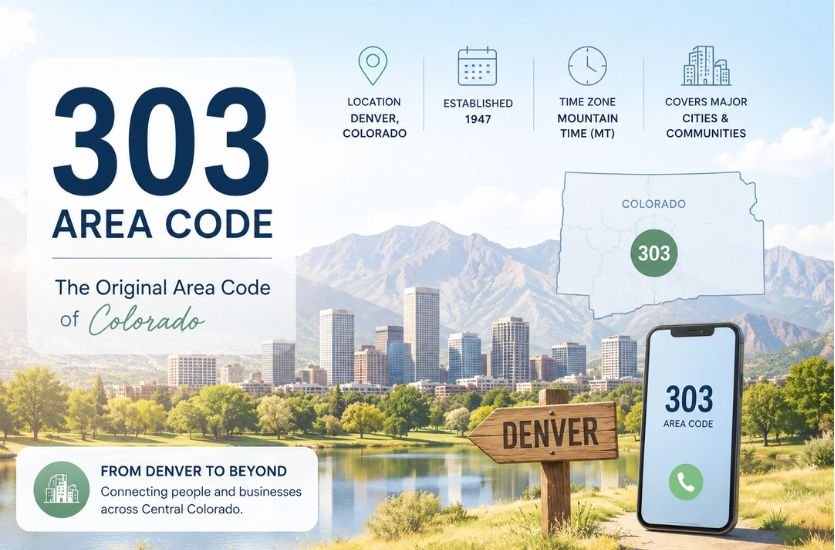
The 303 area code is a telephone area code in the North American Numbering Plan (NANP) that primarily serves the Denver metropolitan area in the state of Colorado. It was introduced in 1947 when the North American Numbering Plan was first established, making it one of the original area codes assigned in the United States.
Unlike many newer area codes that were created due to population growth or increased demand for telephone numbers, the 303 area code has a long history dating back to the early years of modern telecommunications. Over time, it has become much more than a series of numbers. For many residents and businesses, a 303 phone number represents a connection to Colorado’s largest metropolitan region and carries a sense of local identity.
Although the area code originally covered the entire state of Colorado, rapid population growth eventually required additional area codes to ensure enough telephone numbers were available. Today, 303 primarily serves Denver and nearby cities while sharing the same geographic region with overlay area codes 720 and 983.
Where Is the 303 Area Code Located?
The 303 area code is located in north-central Colorado and covers the heart of the Denver metropolitan area. This region is the state’s economic, cultural, and governmental center, making it one of the busiest telecommunications markets in the Rocky Mountain region.
The largest city served by the 303 area code is Denver, Colorado’s capital and most populous city. However, the coverage extends well beyond Denver itself. Numerous suburban communities, business districts, educational institutions, and residential neighborhoods also fall within the service area.
Because the Denver metropolitan region continues to grow rapidly, millions of residents rely on telephone numbers assigned under the 303, 720, and 983 area codes.
Major Cities Covered by the 303 Area Code
Several well-known Colorado cities use the 303 area code either exclusively or alongside overlay area codes. Denver is naturally the most recognized city, but many surrounding communities are equally important.
Boulder is one of the most prominent cities in the area, known for its university, technology companies, outdoor recreation, and vibrant economy. Lakewood, located immediately west of Denver, is another major municipality served by the area code.
Westminster, Arvada, Thornton, Centennial, Littleton, Broomfield, Longmont, Golden, Englewood, Lafayette, Louisville, Wheat Ridge, and Northglenn also fall within the general service region.
These communities form one of the fastest-growing metropolitan areas in the western United States. Businesses operating throughout these cities often prefer local telephone numbers beginning with the 303 prefix because customers immediately recognize them as belonging to the Denver area.
Counties Served by the 303 Area Code
The 303 area code serves portions of several Colorado counties that make up the Denver metropolitan region.
Denver County forms the center of the service area. Jefferson County, Adams County, Boulder County, Douglas County, and Broomfield County are also included. Together, these counties represent one of Colorado’s largest concentrations of residents, businesses, universities, healthcare systems, and government agencies.
Because population growth continues across these counties, the demand for new telephone numbers has remained consistently high over the past several decades.
Time Zone of the 303 Area Code
All telephone numbers using the 303 area code operate within the Mountain Time Zone.
During most of the year, the region follows Mountain Standard Time (MST), which is seven hours behind Coordinated Universal Time (UTC−7). When daylight saving time begins in the spring, the area shifts to Mountain Daylight Time (MDT), which is UTC−6.
Knowing the correct time zone is particularly important for businesses communicating with customers, scheduling meetings, or providing customer support across multiple states.
The History Behind the 303 Area Code
The history of the 303 area code reflects the remarkable growth of Colorado over nearly eight decades.
In 1947, AT&T and Bell System engineers introduced the North American Numbering Plan to simplify long-distance telephone dialing across the United States, Canada, and several neighboring countries. At that time, Colorado received a single area code—303—which covered the entire state.
During the 1950s and 1960s, Colorado’s population remained relatively modest, allowing one area code to meet the state’s telecommunications needs. As the decades passed, however, Colorado experienced rapid economic development fueled by aerospace industries, technology companies, higher education, tourism, and expanding suburban communities.
The Denver metropolitan area became the primary destination for new residents, leading to an enormous increase in demand for residential and business telephone lines. Every new home, office, fax machine, pager, and eventually mobile phone required its own telephone number.
By the late twentieth century, one area code could no longer provide enough available telephone numbers for the entire state. This marked the beginning of several important changes that reshaped Colorado’s telephone numbering system.
How the 303 Area Code Changed Over Time
The first major change occurred in 1988 when southern Colorado, including Colorado Springs and Pueblo, received the new 719 area code. This reduced the geographic size of the original 303 area code.
Only a few years later, continued population growth required another split. In 1995, northern and western Colorado were assigned the 970 area code. After this adjustment, the 303 area code became focused primarily on Denver and surrounding metropolitan communities.
These changes helped increase the supply of available telephone numbers, but the explosive growth of mobile phones soon created another challenge. Every new cellular phone required its own number, dramatically accelerating number exhaustion.
By the late 1990s, telecommunications planners realized another solution would soon be necessary.
Why the 720 Area Code Was Introduced
Instead of dividing the Denver metropolitan area once again, regulators introduced an overlay area code.
In 1998, the 720 area code officially entered service. Rather than assigning different area codes to different neighborhoods, both 303 and 720 were allowed to serve the exact same geographic region.
This approach prevented residents and businesses from having to change existing telephone numbers. People who already had 303 numbers were allowed to keep them, while new customers could receive either a 303 or 720 number depending on availability.
The overlay system proved successful and became increasingly common across the United States as metropolitan populations continued to expand.
The addition of the 720 area code provided temporary relief, but the rapid pace of technological advancement meant that the demand for new telephone numbers continued to rise. The widespread adoption of smartphones, tablets with cellular connectivity, business VoIP systems, home security devices, and other communication technologies significantly increased the number of telephone lines required throughout the Denver metropolitan area. As a result, the available pool of numbers assigned to both the 303 and 720 area codes gradually became exhausted.
Recognizing this challenge, the Colorado Public Utilities Commission approved another overlay area code to ensure there would be enough telephone numbers for future residents and businesses. In June 2022, the 983 area code officially entered service. Like 720 before it, 983 covers the same geographic region as 303 and 720. Existing customers kept their current numbers, while new customers may now receive a 303, 720, or 983 number depending on availability.
This three-area-code overlay system ensures that the Denver metropolitan region can continue to support its growing population without requiring widespread changes to existing telephone numbers.
Understanding the Overlay System
An overlay area code is different from the traditional method of splitting geographic regions into separate numbering areas. Instead of assigning a new area code to a different part of the city, an overlay places multiple area codes within the same geographic boundaries.
This means two neighbors living on the same street may have completely different area codes while sharing the same ZIP code and local community. One household may have a 303 number, another may use 720, while a newly established business across the road may receive a 983 number.
Although this approach preserves existing phone numbers, it also requires everyone to use ten-digit dialing for local calls. Residents must dial the area code followed by the seven-digit phone number, even when calling someone in the same neighborhood.
Today, ten-digit dialing has become second nature for most people, especially with smartphones automatically storing complete telephone numbers.
Why the 303 Area Code Remains Special
Despite the introduction of newer overlays, the 303 area code continues to enjoy a unique reputation throughout Colorado. Because it was the state’s original area code, many residents associate it with long-standing businesses, established families, and Denver’s rich history.
For decades, having a 303 phone number has been viewed as a sign that someone has deep roots in the Denver area. Many companies proudly advertise their 303 telephone numbers because customers immediately recognize them as local businesses.
The area code has even become part of Colorado’s culture. It frequently appears in company branding, apparel, social media usernames, and marketing campaigns that celebrate Denver’s identity. For many locals, “303” symbolizes much more than a telephone prefix—it represents home.
Business Advantages of a 303 Phone Number
Local phone numbers continue to play an important role in building trust with customers. Even though businesses increasingly communicate through websites, email, and social media, many consumers still prefer dealing with companies that have a recognizable local phone number.
A 303 number instantly signals that a business operates within or serves the Denver metropolitan area. This familiarity can make potential customers feel more comfortable when contacting a company for products or services.
Small businesses, law firms, medical clinics, real estate agencies, financial advisors, contractors, and technology companies often value a 303 number because it strengthens their local presence. Customers are generally more likely to answer calls from a familiar local area code than from an unfamiliar out-of-state number.
For companies expanding into Colorado, obtaining a local telephone number can also improve customer confidence and support regional marketing efforts.
Is Every 303 Number Located in Denver?
Not necessarily. While the 303 area code is strongly associated with Denver, it also serves many surrounding communities across the metropolitan region. A person calling from a 303 number could be located in Boulder, Lakewood, Arvada, Westminster, Littleton, Longmont, Golden, Centennial, or several other nearby cities.
Additionally, advances in mobile technology and number portability allow people to keep their telephone numbers even after moving to another city or state. Someone who originally received a 303 mobile number while living in Colorado may continue using the same number after relocating elsewhere in the United States.
Therefore, a 303 phone number does not always indicate a caller’s current physical location.
Are Calls from the 303 Area Code Safe?
Most calls originating from the 303 area code are entirely legitimate. Millions of residents, businesses, schools, healthcare providers, and government offices use 303 telephone numbers every day.
However, like nearly every other area code in North America, scammers sometimes use caller ID spoofing to make fraudulent calls appear as though they originate from a trusted local number. This practice has become increasingly common in recent years.
Receiving a call from a 303 number does not automatically mean the caller is actually located in Colorado. Modern spoofing technology allows scammers to display almost any telephone number they choose.
If you receive an unexpected call requesting sensitive personal information, banking details, passwords, or immediate payment, it is wise to remain cautious. Legitimate organizations rarely pressure individuals into making urgent financial decisions over the phone.
If you are uncertain about a caller’s identity, it is generally safer to hang up and contact the organization directly using its official phone number listed on its website.
Can You Still Get a 303 Phone Number?
Yes, obtaining a 303 telephone number is still possible, although availability is much more limited than it was in previous decades.
Because the Denver metropolitan area has experienced tremendous growth, many available number blocks under the original 303 area code have already been assigned. New residents and businesses are often issued numbers beginning with 720 or 983 instead.
Some telecommunications providers may still have unused 303 numbers available, particularly if existing numbers have been disconnected and returned to the numbering pool. Businesses seeking a specific 303 number may also find options through specialized phone service providers, though availability cannot be guaranteed.
For most practical purposes, there is little functional difference between 303, 720, and 983. All three area codes serve the same geographic region and provide identical telephone services.
Population Growth and the Future of the 303 Area Code
Colorado remains one of the fastest-growing states in the United States, and the Denver metropolitan area continues to attract new residents due to its strong economy, outdoor recreation opportunities, educational institutions, and expanding technology sector.
As more people move into the region, demand for telephone numbers will continue to increase. Fortunately, the introduction of the 983 overlay has significantly expanded the available supply of numbers, ensuring that residents and businesses can continue obtaining new telephone services for many years to come.
While additional overlays may eventually become necessary in the distant future, the combination of 303, 720, and 983 is expected to meet the region’s telecommunications needs for the foreseeable future.
Frequently Asked Questions About the 303 Area Code
One of the most common questions people ask is whether the 303 area code is used only for landline phones. The answer is no. Today, both landline and mobile phone numbers are assigned within the 303 area code. Whether you receive a call from a home phone, a business office, or a smartphone, the number may begin with 303 if it was issued within the Denver metropolitan numbering region.
Another frequently asked question is whether 303 is still considered the primary area code for Denver. Historically, it certainly is. It remains the original and most recognizable area code associated with the city. However, because Denver now uses an overlay numbering system, new phone numbers may also begin with 720 or 983. All three area codes are equally valid and serve the same geographic area.
People also wonder if changing to a different area code affects call quality or phone service. In reality, an area code is simply part of a telephone number used for routing calls. It has no impact on voice quality, internet speed, mobile coverage, or the features offered by your telephone service provider.
Another common concern involves identifying whether a 303 call is legitimate. While countless trusted businesses, healthcare providers, educational institutions, and government offices use 303 numbers every day, it is important to remember that scammers can spoof local numbers. If an unexpected caller asks for personal information, financial details, passwords, or immediate payment, verify their identity independently before taking any action.
Interesting Facts About the 303 Area Code
The 303 area code has several unique characteristics that distinguish it from many other telephone area codes in the United States. It is one of the original 86 area codes introduced when the North American Numbering Plan launched in 1947, making it one of the oldest active area codes in North America.
For more than four decades, 303 covered the entire state of Colorado. As the state’s population grew and demand for telephone numbers increased, new area codes were introduced to divide and later overlay the region. Even after these changes, 303 retained its strong connection with Denver and the surrounding metropolitan area.
Many longtime Colorado residents take pride in having a 303 phone number because it often reflects years of living in the region. Businesses also value the number because customers recognize it as local, helping establish familiarity and trust.
The number “303” has even become part of Colorado’s identity beyond telecommunications. It appears in business names, clothing brands, artwork, local events, and social media accounts as a symbol of Denver and its surrounding communities.
Tips for Handling Unknown 303 Calls
Receiving a call from an unfamiliar 303 number does not automatically indicate that it is suspicious. Many legitimate organizations, including hospitals, schools, banks, government agencies, and local businesses, regularly contact customers using 303 telephone numbers.
If you do not recognize the caller, let the call go to voicemail if possible. Legitimate callers usually leave a message explaining why they contacted you. Before returning the call, listen carefully to the voicemail and verify the organization through its official website or customer service number.
Avoid sharing sensitive personal information such as Social Security numbers, banking details, online passwords, or one-time verification codes during unexpected phone calls. Reputable organizations generally do not request this information without proper verification.
Many smartphones also include built-in spam detection features that can identify suspected scam calls. Keeping your device updated and enabling spam protection can help reduce unwanted calls regardless of the area code.
Why the 303 Area Code Will Continue to Matter
Although communication methods have evolved dramatically with email, messaging apps, and video conferencing, telephone numbers remain an essential part of everyday life. Businesses continue to rely on local phone numbers to connect with customers, while residents use them for healthcare appointments, emergency services, financial transactions, and personal communication.
The 303 area code has adapted to changing technology while maintaining its historical importance. From traditional rotary telephones to today’s smartphones and cloud-based communication systems, it has remained at the center of Colorado’s telecommunications network for nearly eight decades.
As Denver continues to expand and attract new residents, the original 303 area code will remain a respected symbol of the region’s history. Even though newer overlays like 720 and 983 provide additional numbering capacity, the legacy of 303 is unlikely to fade anytime soon.
For many people, seeing a 303 number on their phone instantly brings to mind Colorado’s capital city, the Rocky Mountains, thriving businesses, world-class universities, and vibrant communities that have shaped the state’s identity for generations.
Conclusion
The 303 area code is far more than a numerical prefix attached to a telephone number. It represents a significant chapter in the history of American telecommunications and reflects the remarkable growth of Colorado over the past several decades. Introduced in 1947 as one of the original North American area codes, it initially served the entire state before evolving into the primary area code for Denver and its surrounding metropolitan communities.
Today, the 303 area code shares its geographic region with the 720 and 983 overlays, ensuring that the rapidly growing Denver area has enough telephone numbers to meet future demand. Despite these additions, 303 continues to hold a special place in the hearts of residents and businesses, symbolizing local identity, long-standing community ties, and Colorado’s rich heritage.
Whether you received a call from a 303 number, are considering obtaining a local Colorado phone number, or simply wanted to understand its history, knowing the story behind this iconic area code provides valuable context. As technology continues to evolve and communication methods change, the 303 area code remains one of the most recognizable and respected telephone prefixes in the United States, connecting millions of people across one of America’s most dynamic metropolitan regions.