
Introduction
Every journey begins with a gateway, and for thousands of travelers visiting eastern Georgia each year, that gateway is Augusta GA Bush Field. Officially known as Augusta Regional Airport at Bush Field (AGS), this airport is much more than a place where planes take off and land. It serves as the primary aviation hub for Augusta, connecting residents, business travelers, military personnel, and golf enthusiasts to destinations across the United States.
Bush Field holds a unique place in Georgia’s aviation history. Established during World War II as a military training facility, it has evolved into a modern regional airport while preserving its historical identity. Every April, the airport becomes one of the busiest regional airports in America as thousands of visitors arrive for the world-famous Masters Tournament. Throughout the rest of the year, it continues to support economic growth, tourism, education, healthcare, and commerce throughout the Central Savannah River Area.
Whether you’re planning your first trip through Augusta Regional Airport, researching its fascinating history, or simply curious about why locals still call it Bush Field, this guide covers everything you need to know.
Also Read: 808 Area Code: Location, Cities, History, Time Zone, and Everything You Need to Know
What Is Augusta GA Bush Field?
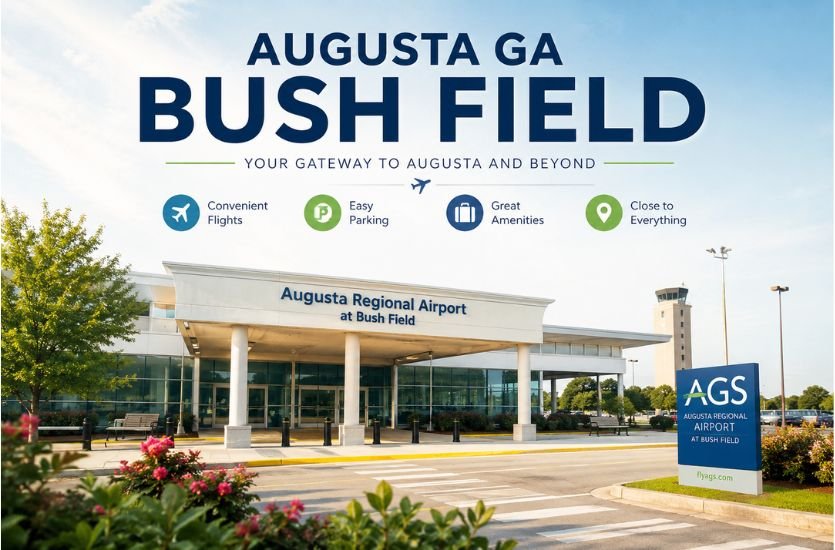
Augusta GA Bush Field is the historic name for Augusta Regional Airport at Bush Field, located approximately six miles south of downtown Augusta, Georgia. The airport serves as the primary commercial airport for Augusta and several surrounding counties in eastern Georgia and western South Carolina.
Operating under the airport code AGS, Bush Field offers scheduled commercial airline service, private aviation facilities, corporate aviation services, military operations, and general aviation activities. Although relatively small compared to major international airports, it provides travelers with convenient access to important business centers and airline hubs across the country.
Its manageable size is one of its greatest advantages. Travelers often appreciate shorter security lines, easier parking, quicker baggage claim, and less crowded terminals compared to larger airports.
The Origin of the Name “Bush Field”
Many first-time visitors assume Bush Field was named after a former president or a geographic feature, but the story is much more meaningful.
The airport honors Don C. Bush, a respected civilian flight instructor who played an important role during the early years of military pilot training. During World War II, Bush was involved in preparing pilots for military service. Tragically, he lost his life in an aviation accident while contributing to the nation’s wartime training efforts.
To recognize his dedication and sacrifice, the military named the airfield Bush Field. Even after decades of expansion, modernization, and eventual renaming as Augusta Regional Airport at Bush Field, the historic name has remained an important part of the airport’s identity.
Today, many local residents continue referring to the airport simply as “Bush Field,” preserving a connection to its historical roots.
The Fascinating History of Bush Field
Bush Field’s history stretches back to one of the most significant periods in American aviation.
Construction began during the early 1940s as the United States prepared for its involvement in World War II. The military needed additional locations to train pilots quickly, and Augusta’s favorable weather and available land made it an ideal location.
The newly built airfield soon became an active pilot training center operated by the U.S. Army Air Forces. Thousands of aviation cadets completed portions of their flight instruction at Bush Field before moving on to combat assignments around the world.
During the height of wartime operations, instructors, mechanics, engineers, and military personnel worked around the clock. The base included training facilities, maintenance hangars, barracks, classrooms, and multiple runways capable of supporting various military aircraft.
Historical records indicate that more than 5,000 military pilots received training at Bush Field during the war years. This contribution made Augusta an important part of America’s aviation training network.
Following the end of World War II, military operations gradually decreased. Like many former military airfields across the country, Bush Field entered a period of transition.
The airport later served as a storage location for surplus military aircraft before eventually being transferred to local government ownership.
Transition to Commercial Aviation
The next chapter in Bush Field’s history began when commercial aviation expanded throughout the United States during the post-war years.
In 1950, ownership transferred to the City of Augusta, marking the beginning of the airport’s transformation into a civilian transportation hub. Commercial airline service that had previously operated from Daniel Field moved to Bush Field, providing residents with improved passenger service and room for future growth.
Over the following decades, airport officials invested heavily in infrastructure improvements. New terminals, expanded runways, upgraded navigation systems, additional parking, and improved passenger amenities gradually transformed the former military installation into a modern regional airport.
The airport also attracted corporate aviation, cargo operations, and private aircraft owners, creating a diverse aviation community that continues today.
Why the Airport Was Renamed
Although local residents continued using the name Bush Field, airport officials recognized the need for a name that better reflected the airport’s broader regional importance.
In 2000, the facility officially became Augusta Regional Airport at Bush Field.
The updated name accomplished two goals simultaneously. It identified Augusta as the airport’s primary service area while preserving the historical significance of Bush Field.
This balance between history and modernization has become one of the airport’s defining characteristics.
Visitors arriving today still encounter reminders of the airport’s military heritage while enjoying facilities designed for modern commercial travel.
Airport Location and Accessibility
One reason Bush Field remains popular among travelers is its convenient location.
Situated just south of downtown Augusta, the airport provides easy access to Interstate highways, major medical centers, business districts, universities, hotels, and recreational attractions.
Travelers can typically reach downtown Augusta within fifteen to twenty minutes, depending on traffic conditions. This short travel time makes the airport attractive for both business and leisure visitors.
Its central location also benefits neighboring communities across eastern Georgia and western South Carolina, reducing the need for lengthy drives to larger airports in Atlanta or Columbia.
Because traffic congestion around Bush Field is generally lighter than at major metropolitan airports, arriving passengers often experience a smoother transition from airplane to automobile.
Terminal Facilities and Passenger Experience
Despite being classified as a regional airport, Bush Field offers many amenities that travelers expect from larger aviation facilities.
The passenger terminal is designed for efficiency and convenience. Check-in counters are located near the main entrance, allowing passengers to move quickly from arrival to security screening.
Inside the terminal, travelers find comfortable seating areas, charging stations for electronic devices, complimentary Wi-Fi access, food and beverage options, vending machines, restrooms, airline customer service desks, and baggage claim facilities.
Business travelers appreciate the airport’s calm atmosphere, which allows them to work while waiting for flights without the overwhelming crowds often found at major airports.
Families traveling with children also benefit from the airport’s compact layout. Walking distances between parking areas, ticket counters, security checkpoints, and departure gates are relatively short, making the overall travel experience less stressful.
Accessibility remains another important priority. Elevators, wheelchair assistance, accessible restrooms, designated parking spaces, and ADA-compliant facilities ensure that passengers with disabilities can travel comfortably.
Runways and Aviation Operations
Bush Field operates with two paved runways capable of handling a wide variety of aircraft.
The primary runway accommodates commercial passenger jets used by major airlines while also supporting military aircraft, corporate jets, and larger charter operations.
A secondary runway primarily serves general aviation traffic, flight training, private pilots, and smaller aircraft.
Modern lighting systems, precision navigation equipment, air traffic control services, and weather monitoring technology allow aircraft to operate safely under varying weather conditions.
Beyond commercial airline service, the airport supports numerous aviation activities throughout the year. Corporate aviation departments utilize Bush Field for executive travel, while medical flights, cargo aircraft, military operations, and private aviation contribute to daily airport activity.
The combination of commercial and general aviation makes Bush Field one of the region’s most versatile transportation assets.
Airlines Serving Augusta Regional Airport
Although Bush Field is smaller than many metropolitan airports, it provides reliable connections through major U.S. airline networks.
Passengers can access nonstop service to several important hub airports, where convenient connections open travel opportunities to hundreds of domestic and international destinations.
Major airlines operating from Augusta Regional Airport include American Airlines and Delta Air Lines. Through their hub networks, travelers can easily reach cities throughout North America, Europe, Asia, South America, and beyond with only one connecting flight.
Rather than offering dozens of direct destinations, Bush Field focuses on efficient connections that minimize travel complexity while maintaining dependable schedules.
This approach allows residents of the Augusta region to enjoy access to the global air transportation network without needing to drive several hours to a larger airportTransportation Options to and from Bush Field
Getting to and from Augusta Regional Airport at Bush Field is simple thanks to its convenient location and multiple transportation options. Whether you are a visitor arriving for business, a family vacation, or a major sporting event, you’ll find reliable ways to reach your destination.
Rental car agencies operate directly from the airport, allowing travelers to pick up vehicles shortly after collecting their luggage. This option is especially popular among visitors who plan to explore Augusta and nearby cities at their own pace. Several nationally recognized rental companies maintain service counters at the airport, offering vehicles that range from economy cars to SUVs.
Ride-sharing services such as Uber and Lyft are also available and have designated pickup locations near the terminal. These services provide a convenient solution for passengers heading to hotels, conference centers, or residential neighborhoods throughout the Augusta metropolitan area.
Traditional taxi services continue to operate from the airport as well, giving travelers another dependable transportation choice. Many local hotels also offer complimentary airport shuttle services for their guests, particularly during busy travel periods.
Because Bush Field is located close to downtown Augusta, travel times are generally short. Most visitors can reach the city’s central business district, hospitals, restaurants, and entertainment venues within twenty minutes, making the airport an excellent gateway to the region.
Parking at Augusta Regional Airport
One of the biggest advantages of flying through Bush Field is the ease of parking. Unlike many large airports where parking can become expensive and confusing, Augusta Regional Airport provides straightforward parking options designed for convenience.
Short-term parking is located close to the terminal, making it ideal for passengers being dropped off or picked up and for travelers taking brief business trips. Long-term parking offers economical daily rates for extended travel, while accessible parking spaces are available near terminal entrances for passengers with disabilities.
The parking lots are well-lit, regularly maintained, and monitored for security, providing travelers with peace of mind while they are away. Because the airport handles fewer passengers than major metropolitan airports, finding an available parking space is usually quick and stress-free.
Many frequent travelers appreciate being able to park within a short walking distance of the terminal rather than relying on shuttle buses from distant parking lots.
Why Bush Field Becomes So Busy During the Masters Tournament
Every April, Augusta transforms into one of the world’s most recognizable sports destinations as it hosts the prestigious Masters Tournament. During this period, Bush Field experiences a dramatic increase in aviation activity unlike any other time of year.
Professional golfers, tournament officials, corporate executives, media organizations, celebrities, sponsors, and thousands of spectators travel through Augusta Regional Airport. In addition to scheduled commercial flights, the airport welcomes an extraordinary number of private jets from across the United States and around the world.
Temporary aircraft parking areas are often established to accommodate the surge in private aviation. Air traffic controllers coordinate hundreds of additional aircraft movements, while airport staff work extended hours to ensure smooth operations.
Hotels, restaurants, transportation companies, and local businesses all benefit from the increased visitor traffic generated during Masters week. For many travelers, Bush Field serves as their first impression of Augusta, making efficient airport operations especially important during this internationally recognized event.
Despite the seasonal increase in passenger volume, the airport consistently receives praise for maintaining organized operations and minimizing delays whenever possible.
Economic Importance to Augusta and the Region
Bush Field is much more than a transportation facility; it is a significant contributor to the regional economy. The airport supports employment opportunities across numerous industries, including aviation, hospitality, tourism, transportation, maintenance, retail, construction, and professional services.
Businesses rely on the airport to connect employees, clients, and suppliers with major commercial centers across the country. Healthcare organizations, particularly Augusta’s nationally recognized medical institutions, also benefit from dependable air service for physicians, researchers, and patients traveling from other states.
The airport encourages new business investment by providing companies with efficient access to national airline networks. Corporate aviation facilities attract executives and investors who require flexible travel options, further strengthening Augusta’s economic development efforts.
Tourism represents another major benefit. Visitors arriving to attend sporting events, conventions, cultural festivals, and recreational activities contribute millions of dollars to the local economy each year through hotel stays, dining, shopping, and entertainment spending.
Business and Corporate Aviation
Commercial airline service represents only part of Bush Field’s daily operations. Corporate aviation has become an increasingly important component of airport activity.
Many regional companies maintain business aircraft that operate from Bush Field, allowing executives to travel efficiently without relying solely on commercial flight schedules. Fixed-base operators provide fueling, aircraft maintenance, hangar space, pilot lounges, and concierge services tailored to corporate and private aviation customers.
Business aviation offers companies greater flexibility, enabling executives to visit multiple locations in a single day and reach destinations that may not have regular airline service. This capability supports economic growth throughout Augusta and strengthens connections with businesses nationwide.
Private charter companies also operate from Bush Field, providing customized travel solutions for individuals, sports teams, entertainers, government officials, and corporate groups.
Military and General Aviation Operations
Bush Field’s military heritage remains an important part of its identity. Although it now functions primarily as a civilian airport, military aircraft continue to utilize the facility for training exercises, transportation missions, and operational support when needed.
General aviation also plays a vital role in daily airport operations. Private pilots, flight instructors, aviation students, medical transport aircraft, agricultural aviation services, and recreational flyers regularly use the airport’s facilities.
Flight schools based at or near Bush Field help train future pilots, continuing the airport’s long-standing connection to aviation education. This diverse mix of aviation activity contributes to the airport’s vibrant operational environment and supports the broader aviation community throughout eastern Georgia.
Nearby Attractions for Visitors
Many travelers arriving through Bush Field choose to extend their stay and explore Augusta’s attractions. The city offers a blend of history, culture, outdoor recreation, and world-class sporting events.
The most famous destination is Augusta National Golf Club, home of the Masters Tournament and one of the most iconic golf courses in the world. Golf enthusiasts travel from across the globe to experience the atmosphere surrounding this legendary venue.
Downtown Augusta features the scenic Riverwalk along the Savannah River, offering walking paths, public art, restaurants, and seasonal events. Visitors interested in local history can explore museums that showcase the city’s role in American history, music, and medicine.
Nature lovers often enjoy nearby parks, gardens, and wildlife areas, while families appreciate local entertainment venues, shopping districts, and cultural festivals held throughout the year.
Bush Field’s proximity to these attractions makes it an excellent starting point for exploring everything Augusta has to offer.
Safety, Modernization, and Future Growth
Augusta Regional Airport continues investing in modernization projects that improve safety, passenger comfort, and operational efficiency. Airport leadership works closely with federal and state aviation agencies to maintain high standards for infrastructure, security, and customer service.
Recent improvements have included terminal upgrades, runway maintenance, enhanced navigation technology, improved lighting systems, and expanded passenger amenities. These investments help ensure that the airport remains capable of meeting future travel demands while maintaining safe and reliable operations.
Long-term planning also focuses on attracting additional airline service, expanding business aviation opportunities, and supporting sustainable economic growth throughout the region.
As air travel continues evolving, Bush Field remains committed to balancing modernization with the historic character that has defined the airport for decades.
Travel Tips for Flying Through Augusta GA Bush Field
Traveling through Augusta Regional Airport at Bush Field is generally a smooth experience, but a little preparation can make your trip even easier. Because the airport is smaller than many major hubs, passengers often spend less time navigating the terminal. Even so, arriving at least 90 minutes before domestic departures is recommended, especially during holidays or the busy Masters Tournament season.
If you’re visiting Augusta for the first time, consider reserving a rental car in advance, particularly during April when demand rises significantly. Hotel accommodations also book quickly during major events, so early reservations can help you secure better rates and preferred locations.
Weather in Augusta is generally favorable for air travel, but summer thunderstorms can occasionally affect flight schedules. Checking your airline’s flight status before leaving for the airport is always a smart idea.
Passengers connecting through hubs such as Atlanta or Charlotte should allow enough time for connecting flights, especially during peak travel seasons. Since Bush Field primarily connects travelers through larger airports, planning your itinerary carefully can reduce the likelihood of missed connections.
One of the airport’s biggest advantages is its relaxed atmosphere. Security checkpoints are typically less crowded than those at larger airports, allowing travelers to move through the terminal with minimal stress.
How Bush Field Compares to Larger Airports
Many travelers wonder whether flying through a regional airport offers advantages over using a major international airport. For Augusta residents and visitors, Bush Field often provides a more convenient and comfortable travel experience.
Unlike sprawling airports where passengers may walk long distances between terminals, Bush Field features a compact layout that makes navigation simple. Travelers can check in, pass through security, and reach their departure gates in a relatively short amount of time.
Parking is another significant advantage. Large airports often require expensive parking garages or remote lots connected by shuttle buses. At Bush Field, parking areas are located close to the terminal, reducing both walking distance and travel time.
The airport’s manageable size also contributes to a more personal customer experience. Airline employees, airport staff, and security personnel are often able to provide individualized assistance, creating a welcoming atmosphere for travelers.
Although larger airports offer more nonstop destinations, Bush Field compensates by providing convenient connections through major airline hubs. For many passengers, the time saved by avoiding heavy traffic, long security lines, and crowded terminals outweighs the need for an additional connecting flight.
Environmental Responsibility and Community Engagement
Like many modern airports, Augusta Regional Airport has embraced initiatives that support environmental responsibility and community involvement. Ongoing maintenance projects are designed to improve energy efficiency while preserving the airport’s operational reliability.
Airport management works with local organizations, educational institutions, and government agencies to promote aviation awareness and workforce development. Community events, educational programs, and partnerships with local businesses strengthen the airport’s role as an important regional asset.
Environmental considerations also influence infrastructure planning, with projects aimed at reducing energy consumption, improving stormwater management, and maintaining the surrounding natural environment. These efforts help ensure that Bush Field continues serving future generations while minimizing its environmental impact.
Why Bush Field Remains an Important Regional Airport
Bush Field’s importance extends well beyond passenger travel. The airport serves as a critical transportation link for businesses, healthcare providers, educational institutions, government agencies, and military organizations throughout eastern Georgia and neighboring South Carolina.
Medical professionals frequently rely on the airport for conferences, specialized training, and patient-related travel. Universities and colleges benefit from convenient airline access for faculty, researchers, and visiting students. Local manufacturers and technology companies use the airport to maintain connections with customers and partners across the country.
The airport also supports emergency response efforts when necessary, providing facilities that can accommodate disaster relief operations, medical flights, and other essential aviation services.
As Augusta continues to grow economically and attract new industries, Bush Field will likely play an even greater role in supporting regional development and connectivity.
Frequently Asked Questions
Is Bush Field the same as Augusta Regional Airport?
Yes. Bush Field is the historic name, while the airport’s official name is Augusta Regional Airport at Bush Field. Both names refer to the same airport serving Augusta, Georgia.
What is the airport code for Bush Field?
The airport uses the IATA code AGS, which appears on airline tickets, baggage tags, and flight schedules.
Which airlines operate from Augusta Regional Airport?
American Airlines and Delta Air Lines provide scheduled commercial service, offering connections through major hub airports such as Charlotte and Atlanta.
How far is Bush Field from downtown Augusta?
The airport is located approximately six miles south of downtown Augusta, making it a convenient choice for both residents and visitors.
Why is it called Bush Field?
The airport honors Don C. Bush, a civilian flight instructor who contributed to military pilot training during World War II and lost his life in an aviation accident.
Is Bush Field busy during the Masters Tournament?
Yes. Every April, the airport experiences one of its busiest periods of the year as thousands of visitors, golfers, media personnel, and private aircraft arrive for the Masters Tournament.
Does the airport offer rental cars?
Yes. Multiple national rental car companies operate at the airport, allowing travelers to begin their journeys immediately after arrival.
Conclusion
Augusta GA Bush Field represents a remarkable blend of history, convenience, and modern aviation. From its origins as a World War II military training base to its current role as Augusta Regional Airport at Bush Field, the airport has continually adapted to meet the changing needs of travelers and the surrounding community.
Its strategic location, efficient terminal, dependable airline service, and strong ties to Augusta’s economy make it an invaluable transportation hub for eastern Georgia. During the world-famous Masters Tournament, Bush Field gains international attention as it welcomes visitors from around the globe, demonstrating its ability to handle increased aviation activity while maintaining high standards of service.
What truly distinguishes Bush Field is its balance between historical significance and modern functionality. Travelers benefit from shorter wait times, convenient parking, friendly service, and easy access to Augusta’s business districts, healthcare facilities, universities, and attractions. At the same time, the airport continues to honor the legacy of Don C. Bush and its important contributions to America’s wartime aviation history.
As infrastructure improvements continue and regional economic growth accelerates, Augusta Regional Airport at Bush Field is well-positioned to remain a vital gateway for passengers, businesses, and the aviation industry. Whether you’re arriving for a golf tournament, a business meeting, a family vacation, or simply passing through on your next journey, Bush Field offers an efficient and welcoming travel experience that reflects the hospitality and heritage of Augusta itself.