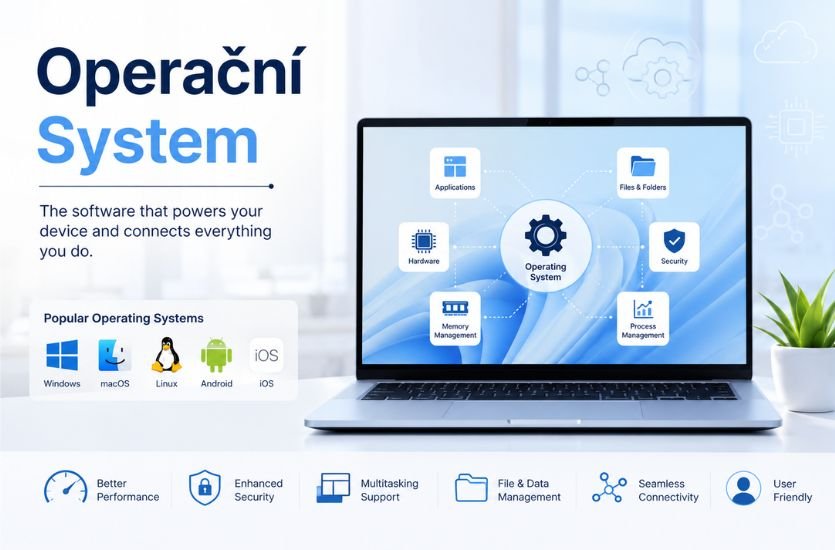
What Is an Operační System? A Complete Beginner’s Guide to Features, Types, Functions, Benefits, and How It Works

Every click, swipe, and command on a computer or smartphone depends on a powerful piece of software working quietly behind the scenes. Whether you are browsing the internet, editing documents, streaming videos, or playing games, none of these tasks would be possible without an operační systém, commonly known as an operating system. It acts as the invisible bridge between hardware and software, ensuring every component works together efficiently and securely.
Modern life revolves around digital devices, making the operating system one of the most essential technologies in everyday computing. From desktop computers and laptops to smartphones, tablets, servers, and even smart home devices, operating systems control how machines function and how users interact with them. Understanding what an operating system does helps users make informed decisions about the devices they use while also appreciating the complex technology that powers modern computing.
Also Read: Why Drinking Fountains Matter: Benefits, Types, and How They Work
What Is an Operační System?
An operační systém is the core software installed on a computing device that manages hardware resources and provides a platform for applications to run. It serves as the communication layer between the user and the physical components of the device, including the processor, memory, storage drives, graphics card, keyboard, mouse, and other connected peripherals.
Without an operating system, a computer would be unable to execute everyday tasks. While hardware provides the physical capability to process information, the operating system organizes these resources so programs can function correctly. Every time a user opens an application, saves a file, or connects to the internet, the operating system coordinates the necessary processes behind the scenes.
An operating system also provides a user interface that makes interacting with technology straightforward. Whether through graphical windows, icons, menus, or command-line interfaces, users rely on the operating system to communicate with their devices efficiently.
The Evolution of Operating Systems
The history of operating systems mirrors the rapid development of computer technology itself. Early computers in the 1940s and 1950s had no operating systems at all. Programs were entered manually, and each task required extensive human intervention.
During the 1960s, batch processing systems emerged, allowing computers to process groups of similar tasks automatically. These systems significantly improved efficiency by reducing manual setup between jobs.
The 1970s introduced time-sharing systems, enabling multiple users to access the same computer simultaneously. Around the same period, UNIX was developed, becoming one of the most influential operating systems ever created. Its design principles continue to influence many modern systems today.
The personal computer revolution of the 1980s brought operating systems into homes and offices worldwide. MS-DOS became popular for IBM-compatible PCs, while Apple introduced graphical interfaces that made computers easier for everyday users.
Microsoft Windows transformed personal computing during the 1990s by introducing increasingly user-friendly graphical environments. At the same time, Linux emerged as a powerful open-source alternative, attracting developers, businesses, and educational institutions.
Today, operating systems extend far beyond desktop computers. Smartphones rely primarily on Android and iOS, while specialized operating systems power cloud servers, smart TVs, wearable devices, industrial equipment, and Internet of Things (IoT) products.
How an Operating System Works
An operating system begins working the moment a computer is powered on. During startup, the system loads essential files into memory through a process known as booting. Once initialized, the operating system takes control of hardware resources and prepares the device for user interaction.
At the heart of every operating system lies the kernel. The kernel is responsible for managing communication between software and hardware. It schedules tasks for the processor, allocates memory to running programs, manages storage devices, and coordinates input and output operations.
Whenever users launch an application, the operating system loads the necessary program into memory and assigns processor time so it can execute properly. If multiple applications are running simultaneously, the operating system continuously switches between them so quickly that users experience smooth multitasking.
The operating system also monitors hardware performance, detects errors, controls connected devices, and protects the overall stability of the computer.
Core Functions of an Operating System
One of the primary responsibilities of an operating system is process management. Every application running on a device consists of one or more processes. The operating system determines how processor time is allocated among these processes to maximize efficiency while preventing conflicts.
Memory management is equally important. Computers have limited physical memory, and the operating system ensures each program receives enough memory to function properly. It also prevents one application from interfering with another by isolating memory spaces.
File management enables users to organize documents, photos, videos, applications, and system files. Operating systems create structured file systems that simplify storing, retrieving, copying, moving, and deleting information.
Device management allows printers, monitors, keyboards, mice, scanners, speakers, cameras, storage devices, and other peripherals to function correctly. Device drivers supplied by manufacturers help the operating system communicate with this hardware.
Security management protects both users and their data. Modern operating systems include password protection, encryption, user permissions, firewall capabilities, malware defenses, and regular security updates designed to reduce vulnerabilities.
Networking functions enable computers to communicate across local networks and the internet. Operating systems manage network connections, wireless communication, internet protocols, file sharing, and remote access technologies.
Main Components of an Operating System
Although operating systems appear simple on the surface, they consist of multiple interconnected components working together.
The kernel serves as the foundation, handling low-level communication between hardware and software.
The shell provides a method for users to interact with the operating system. This may be a graphical user interface or a command-line interpreter.
The file system organizes data into directories and files, making information accessible and manageable.
Device drivers translate operating system instructions into commands that specific hardware components understand.
System libraries contain reusable programming code that applications rely on for performing common operations efficiently.
Utilities include maintenance tools responsible for system diagnostics, backups, storage optimization, software updates, and troubleshooting.
Together, these components create the seamless computing experience users expect from modern devices.
Different Types of Operating Systems
Operating systems are designed for many different environments depending on the hardware they support and the tasks they perform.
Desktop operating systems power personal computers used in homes, schools, and offices. They provide graphical interfaces optimized for productivity, entertainment, and general-purpose computing.
Mobile operating systems are specifically designed for smartphones and tablets. They emphasize touch interaction, battery efficiency, wireless connectivity, and mobile applications.
Server operating systems manage enterprise servers responsible for websites, databases, cloud services, virtualization, and network infrastructure. Reliability, scalability, and security are their highest priorities.
Embedded operating systems run inside specialized devices such as routers, smart televisions, medical equipment, industrial controllers, automobiles, and household appliances. These systems often operate with limited hardware resources while maintaining continuous reliability.
Real-time operating systems focus on immediate response times. They are widely used in aerospace systems, robotics, telecommunications, automotive safety systems, and manufacturing equipment where delays cannot be tolerated.
Distributed operating systems coordinate multiple computers so they appear to function as a single unified system, improving performance and fault tolerance.
The Most Popular Operating Systems Today
Microsoft Windows remains the most widely used desktop operating system across the world. Its extensive software compatibility, gaming support, business applications, and familiar interface make it the preferred choice for millions of users.
Linux has become one of the most respected operating systems for developers, researchers, universities, cloud computing providers, and enterprise servers. Its open-source nature allows organizations to customize the system according to their needs while benefiting from strong security and stability.
Apple’s macOS powers Macintosh computers and integrates seamlessly with the broader Apple ecosystem. It is highly regarded for its polished design, reliability, creative software support, and optimized hardware integration.
ChromeOS, developed primarily for Chromebooks, focuses on cloud computing and web-based applications. Its lightweight design allows inexpensive hardware to deliver fast performance for students and casual users.
Android dominates the smartphone market globally due to its flexibility and availability across numerous manufacturers and price ranges.
Apple’s iOS powers iPhones and is recognized for consistent updates, excellent optimization, privacy protections, and strong application quality.
Windows, Linux, and macOS Compared
Choosing an operating system depends largely on personal requirements and intended usage.
Windows offers unmatched compatibility with commercial software, gaming platforms, office applications, and enterprise solutions. Most hardware manufacturers prioritize Windows support, making it highly versatile.
Linux excels in customization, security, and efficiency. It is often chosen by software developers, cybersecurity professionals, and server administrators because users have complete control over the operating system.
macOS provides a refined experience that combines attractive design with reliable performance. Creative professionals frequently choose Mac computers for video editing, music production, photography, and graphic design due to excellent software optimization.
Each operating system continues evolving to address changing user expectations, security challenges, and technological innovation.
Security Features in Modern Operating Systems
Cybersecurity has become one of the defining responsibilities of operating systems. As internet connectivity has expanded, operating systems have introduced sophisticated protections against malware, ransomware, phishing attacks, and unauthorized access.
User authentication systems verify identities through passwords, biometric recognition, facial recognition, or fingerprint scanning.
Encryption technologies secure stored files and network communications so sensitive information remains protected even if devices are lost or stolen.
Automatic software updates allow developers to quickly distribute security patches that address newly discovered vulnerabilities.
Built-in firewalls monitor incoming and outgoing network traffic, helping block suspicious activity before it reaches critical system components.
Permission systems also limit application access to personal data, reducing the likelihood of unauthorized information collection.
Advantages of Using an Operating System
Operating systems simplify complex computing tasks by presenting users with intuitive interfaces that require little technical expertise. They allow multiple applications to run simultaneously while efficiently managing limited hardware resources.
Standardized programming environments enable developers to build software that functions consistently across compatible devices. This compatibility encourages innovation and supports vast software ecosystems.
Modern operating systems improve productivity by organizing files, automating maintenance, supporting networking, facilitating communication, and providing access to countless applications.
Regular updates continually enhance performance, introduce new features, improve compatibility, and strengthen security protections.
Challenges and Limitations
Despite their importance, operating systems also present certain challenges. Commercial operating systems often require licensing fees or hardware purchases, increasing ownership costs.
Software compatibility issues occasionally arise when older applications cannot run on newer operating system versions. Likewise, some specialized hardware may lack updated drivers.
Security threats remain a constant concern because attackers continuously search for vulnerabilities. Users who neglect software updates increase the risk of malware infections and cyberattacks.
Resource requirements also increase over time. New operating system versions often demand more processing power, memory, and storage than previous releases, encouraging hardware upgrades.
Open-source operating systems such as Linux may require additional technical knowledge, particularly for users unfamiliar with command-line environments.
The Future of Operating Systems
Operating systems continue evolving alongside advances in artificial intelligence, cloud computing, quantum computing, and edge computing.
Artificial intelligence is becoming deeply integrated into operating systems through intelligent search capabilities, automated system optimization, predictive maintenance, natural language interfaces, and personalized recommendations.
Cloud integration enables users to synchronize files, applications, and settings seamlessly across multiple devices while reducing dependence on local storage.
Enhanced cybersecurity will remain a major priority as operating systems adopt more advanced threat detection, behavior analysis, zero-trust security models, and hardware-based protection mechanisms.
Virtualization technologies will continue expanding, allowing multiple operating systems to run simultaneously on the same hardware while improving flexibility for businesses and developers.
As smart homes, connected vehicles, wearable devices, and industrial automation continue growing, specialized operating systems will become even more important in managing billions of interconnected devices worldwide.
Why Understanding Operating Systems Matters
Every digital interaction depends on the operating system functioning reliably behind the scenes. Whether someone uses a laptop for work, a smartphone for communication, or cloud servers for business operations, the operating system coordinates every essential activity that makes modern computing possible.
Understanding how operating systems function helps users choose the right platform, maintain device security, improve performance, troubleshoot common issues, and appreciate the remarkable engineering behind everyday technology. As computing continues to evolve, operating systems will remain the foundation upon which innovation is built, connecting users, applications, and hardware into a seamless digital experience.