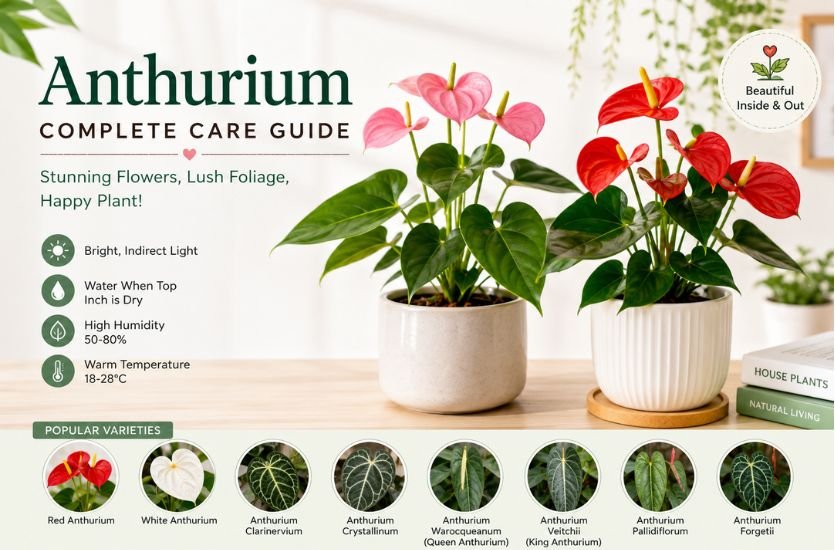

Glossy tropical flowers, dramatic velvet leaves, and an impressive variety of shapes have made the anthurium one of the world’s most admired houseplants. Whether displayed as a flowering centerpiece or cultivated as a rare collector’s specimen, anthuriums bring an unmistakable touch of the rainforest into homes and gardens. Their vibrant appearance, relatively straightforward care requirements, and hundreds of unique species have earned them a special place among indoor plant enthusiasts.
Also Read: Is Sunflower Oil Bad for You?
The anthurium plant belongs to the Araceae family and includes more than 1,000 recognized species native to the tropical rainforests of Central and South America. While many people recognize anthuriums for their colorful blooms, experienced collectors often value them even more for their spectacular foliage. From heart-shaped velvet leaves with brilliant white veins to long cascading foliage that can reach several feet in length, every species offers something unique.
This comprehensive guide explores everything you need to know about anthuriums, including the most popular species, their distinctive characteristics, and why they have become some of the most sought-after tropical houseplants.
What Is an Anthurium?
Anthuriums are evergreen tropical perennials that naturally grow beneath rainforest canopies. Many species are epiphytes, meaning they grow on trees instead of directly in soil, while others grow terrestrially on the forest floor. Their native environment provides warm temperatures, filtered sunlight, excellent airflow, and consistently high humidity.
One reason anthuriums are so fascinating is their incredible diversity. Some species produce striking waxy flowers that bloom throughout the year, while others rarely flower indoors but compensate with breathtaking foliage. Their adaptability has allowed many varieties to become excellent indoor plants when their natural growing conditions are recreated.
Although commonly called flowers, the colorful portion seen on many anthuriums is actually a modified leaf called a spathe. The true flowers are the tiny blooms that grow along the upright spike known as the spadix. This unique structure is one of the defining features of the genus.
Why Anthuriums Are So Popular
The growing popularity of anthuriums is driven by both their ornamental beauty and their versatility. Traditional flowering varieties brighten homes with long-lasting blooms, while foliage species have become prized collector plants because of their dramatic leaf textures, colors, and sizes.
Many anthuriums remain attractive throughout the year without requiring complicated maintenance. Their ability to thrive indoors with bright indirect light makes them suitable for apartments, offices, and homes alike. Social media has also introduced millions of plant lovers to rare species whose stunning leaves have become highly desirable among collectors worldwide.
Anthurium Andraeanum: The Classic Flowering Anthurium
Among all species, Anthurium andraeanum is undoubtedly the most recognizable. It is the variety commonly found in garden centers and florists around the world.
This species is admired for its glossy heart-shaped leaves and colorful spathes that bloom in shades of red, pink, white, orange, and even green. The flowers can last for several weeks, making them one of the longest-lasting flowering houseplants available.
Because of its relatively forgiving nature, Anthurium andraeanum is often recommended for beginners who want an attractive tropical plant that flowers regularly indoors.
Anthurium Clarinervium
Few foliage plants attract attention as quickly as Anthurium clarinervium. Native to Mexico, this species is famous for its thick, velvety, dark green leaves decorated with bold white veins.
Unlike flowering varieties, the beauty of Anthurium clarinervium lies almost entirely in its foliage. The leaves become increasingly dramatic as the plant matures, making it one of the most photographed collector plants today.
Its compact growth habit also makes it suitable for smaller indoor spaces while still delivering an impressive visual impact.
Anthurium Crystallinum
Anthurium crystallinum is another velvet-leaf favorite among collectors. It features large heart-shaped leaves covered with shimmering silver veins that appear almost illuminated under bright indirect light.
Compared to some rare species, Anthurium crystallinum grows relatively quickly when provided with proper humidity and warmth. Mature plants produce enormous leaves that transform any indoor plant collection into a tropical display.
Because of its elegant foliage and manageable care requirements, it has become one of the most recommended rare anthuriums for intermediate growers.
Anthurium Warocqueanum: The Queen Anthurium
Known throughout the plant community as the Queen Anthurium, Anthurium warocqueanum is considered one of the most spectacular foliage plants in existence.
Its narrow velvet leaves can exceed five feet in length under ideal conditions. The deep green surface combined with bright contrasting veins creates an appearance unlike almost any other tropical plant.
Despite its beauty, Queen Anthurium demands consistently high humidity, excellent air circulation, and stable temperatures. These requirements make it better suited for experienced growers who can recreate rainforest conditions inside their homes or greenhouses.
Anthurium Veitchii: The King Anthurium
If Anthurium warocqueanum is the queen, Anthurium veitchii proudly holds the title of the King Anthurium.
This remarkable species produces enormous corrugated leaves that become deeply rippled as they mature. Individual leaves can reach several feet long, creating a dramatic cascading appearance.
Unlike many delicate collector plants, Anthurium veitchii is often considered more adaptable than its royal counterpart. Given sufficient humidity and filtered light, it grows steadily and becomes an impressive centerpiece for indoor tropical collections.
Anthurium Pallidiflorum
One of the most graceful species is Anthurium pallidiflorum, recognized for its exceptionally long, narrow leaves that drape elegantly over the edges of containers.
Instead of producing upright foliage, this species develops a hanging habit that makes it especially attractive in elevated pots or hanging baskets. Mature specimens create a waterfall effect with lush green leaves extending several feet downward.
Its unique growth habit distinguishes it from many other members of the genus.
Anthurium Forgetii
Among all anthuriums, Anthurium forgetii possesses one of the most unusual leaf shapes. Unlike typical heart-shaped species, its leaves lack the characteristic notch or sinus where the lobes usually meet.
The rounded foliage, combined with striking silver veins, gives the plant a clean and elegant appearance that collectors find particularly appealing. Its compact size also makes it suitable for indoor shelves and smaller display areas.
Anthurium Vittarifolium
Another exceptional hanging species is Anthurium vittarifolium, famous for producing long ribbon-like leaves that gracefully cascade from hanging containers.
As the plant matures, the foliage becomes increasingly dramatic, often reaching lengths of several feet. During flowering, bright red berries may develop, adding another layer of ornamental interest to this already stunning species.
Because of its unusual appearance, Anthurium vittarifolium has become increasingly popular among collectors seeking something different from traditional upright foliage plants.
Anthurium Magnificum
The name Anthurium magnificum perfectly reflects its appearance. This species develops enormous velvet leaves with bold white veins and thick, sturdy stems.
It is frequently compared to Anthurium crystallinum because of their similar foliage patterns, but Anthurium magnificum typically produces thicker leaves and a more robust overall structure.
Given proper growing conditions, mature specimens become striking focal points in any indoor plant collection and continue to increase in beauty as they age.
Anthurium Luxurians
Among the rarest collector plants, Anthurium luxurians is admired for its extraordinary leaf texture. Instead of smooth foliage, this species develops thick, heavily bullate leaves with a quilted appearance that almost looks sculpted. The glossy dark green surface reflects light beautifully, making every mature leaf appear three-dimensional. As the plant ages, the foliage becomes increasingly dramatic, and well-grown specimens are considered prized additions to tropical plant collections. Although slower growing than many other species, Anthurium luxurians rewards patient growers with truly unique foliage that few houseplants can match.
Anthurium Wendlingeri
Anthurium wendlingeri stands out because of its unusual flowers and graceful growth habit. It produces long, narrow leaves that arch elegantly from the plant while its most recognizable feature is the spiral-shaped spadix, which twists naturally as it matures. This distinctive flowering structure makes the species instantly recognizable among collectors. Native to humid tropical forests, Anthurium wendlingeri thrives in warm environments with abundant moisture and filtered light, making it an excellent choice for greenhouse collections or carefully maintained indoor spaces.
Anthurium Villenaorum
Another increasingly popular foliage species is Anthurium villenaorum, which features elongated velvety leaves decorated with striking white veins. While still relatively uncommon in commercial nurseries, its growing popularity among collectors has made it more accessible in recent years. The plant combines elegant foliage with a manageable growth habit, making it an attractive option for enthusiasts who want a rare Anthurium without the extreme care requirements of some of the more demanding species.
Red Anthurium and White Anthurium
Flowering Anthuriums are available in an impressive range of colors, but red anthurium and white anthurium remain the two most popular choices worldwide. Red Anthuriums symbolize love, hospitality, passion, and good fortune, making them popular gifts for celebrations, anniversaries, and housewarmings. Their vivid color creates an eye-catching display that lasts for weeks, adding a tropical feel to homes and offices alike.
White Anthuriums offer a completely different aesthetic. Their clean, elegant blooms represent purity, peace, and sophistication. They are frequently used in wedding decorations, hotel lobbies, and modern interior designs where a refined appearance is desired. Both varieties share similar care requirements, allowing gardeners to choose colors based primarily on personal preference rather than differences in maintenance.
Complete Anthurium Care Guide
Successful cultivation begins with understanding the conditions these tropical plants experience in their natural rainforest habitat. An effective anthurium care routine focuses on balancing light, moisture, humidity, temperature, and airflow. When these factors are properly managed, Anthuriums reward growers with healthy foliage and, in many species, spectacular blooms that can last for several weeks.
Light Requirements
One of the most important aspects of an anthurium growing guide is providing appropriate lighting. Anthuriums thrive in bright, indirect sunlight similar to the filtered light beneath rainforest trees. A location near an east-facing window or several feet from a south- or west-facing window usually provides ideal conditions.
Direct afternoon sunlight can scorch delicate leaves, causing brown patches and faded foliage. On the other hand, insufficient light often leads to slower growth, fewer flowers, and reduced leaf size. Maintaining bright but filtered light encourages healthy development while preserving the rich colors and textures that make these plants so attractive.
Watering Needs
Proper watering is essential for long-term success. Anthuriums prefer evenly moist soil but should never remain waterlogged. Before watering, allow the top inch of the growing medium to dry slightly. This simple practice helps prevent root rot while ensuring the plant receives adequate moisture.
The frequency of watering varies depending on temperature, humidity, pot size, and the growing medium. During warmer months, plants generally require more frequent watering than during winter, when growth naturally slows. Rather than following a strict schedule, checking the soil regularly is the best approach.
Choosing the Right Soil
Unlike ordinary houseplants, Anthuriums require an airy, fast-draining growing medium that mimics the loose organic material found in tropical forests. Dense garden soil retains too much water and limits oxygen around the roots.
An ideal mixture often includes orchid bark, perlite, coconut husk chips, peat moss or coco coir, and a small amount of horticultural charcoal. This combination promotes drainage while retaining enough moisture for healthy root development. The result is a growing environment that closely resembles the conditions these plants enjoy in nature.
Humidity Requirements
Humidity is one of the defining factors in successful Anthurium cultivation. Most species perform best when humidity remains between 60 and 80 percent, although some rare collector plants, particularly the Queen Anthurium, appreciate even higher levels.
Low humidity commonly causes brown leaf edges, slower growth, and reduced leaf size. Indoor gardeners often improve humidity by using humidifiers, placing plants near one another, or growing them in naturally humid rooms. Maintaining consistent humidity encourages lush foliage and healthier overall growth.
Temperature
As tropical plants, Anthuriums prefer warm conditions throughout the year. Temperatures between 18°C and 29°C (65°F to 85°F) provide optimal growing conditions. Sudden temperature fluctuations, cold drafts, and prolonged exposure below 15°C (59°F) can stress the plant and slow its development.
Consistency is particularly important for rare velvet-leaf species, which tend to be more sensitive than common flowering varieties. Stable temperatures combined with good airflow help prevent disease while encouraging continuous growth.
Fertilizing Anthuriums
Healthy Anthuriums benefit from regular feeding during the active growing season. A balanced liquid fertilizer diluted to half strength every four to six weeks supplies essential nutrients without overwhelming the roots. Excess fertilizer can lead to salt accumulation in the soil, which may damage roots and reduce plant health.
Reducing fertilization during autumn and winter allows the plant to rest naturally while avoiding unnecessary nutrient buildup. Proper feeding supports vigorous foliage, stronger roots, and more frequent flowering in blooming varieties.
Encouraging Beautiful Anthurium Flowers
Producing vibrant anthurium flowers depends on maintaining favorable growing conditions throughout the year. Adequate light, balanced nutrition, consistent watering, and warm temperatures all contribute to successful blooming. Flowering species such as Anthurium andraeanum can bloom repeatedly under proper care, with individual flowers remaining attractive for six to eight weeks or even longer.
Removing faded blooms allows the plant to redirect energy toward producing fresh growth and future flowers. With patience and consistent care, many Anthuriums become reliable bloomers that brighten indoor spaces for much of the year.
Propagating Anthurium Plants
One of the most rewarding aspects of growing Anthuriums is the ability to propagate healthy plants and expand your collection. The easiest and most reliable method is division, which involves separating mature plants into smaller sections during repotting. Each division should have healthy roots and at least one growing point to ensure successful establishment.
Stem cuttings can also be used for certain species, particularly those that develop elongated stems with visible nodes. When placed in moist sphagnum moss, water, or a well-draining propagation mix, these cuttings often develop new roots within several weeks. Growing Anthuriums from seed is possible but requires patience, as germination can be slow and seedlings may take several years to reach maturity. Commercial growers frequently rely on tissue culture to produce large numbers of disease-free plants, especially for popular ornamental varieties.
Repotting Your Anthurium
Anthuriums do not require frequent repotting, but they benefit from a fresh growing medium every one to two years. Repotting is usually necessary when roots begin circling the container, water drains too quickly, or plant growth noticeably slows despite proper care.
Choose a pot only slightly larger than the previous one, as oversized containers retain excess moisture that can lead to root problems. During repotting, inspect the root system carefully and trim away any damaged or decaying roots using sterilized tools. Replacing old soil with a fresh, airy mix encourages vigorous root growth and provides the nutrients and structure needed for continued development.
Common Problems and Their Solutions
Even well-maintained Anthuriums occasionally develop problems, but most issues can be traced to environmental conditions rather than disease. Yellow leaves are among the most common concerns and are often caused by overwatering, poor drainage, or prolonged exposure to cold temperatures. Allowing the growing medium to partially dry between waterings usually resolves this issue.
Brown leaf edges typically indicate low humidity or inconsistent watering. Increasing humidity around the plant and maintaining a regular watering routine often restores healthy new growth. If leaves appear pale or faded, the plant may be receiving excessive direct sunlight. Moving it to a location with bright but indirect light helps preserve its rich green color.
A lack of flowering is another common frustration, particularly with flowering varieties such as Anthurium andraeanum. Insufficient light, excessive nitrogen fertilizer, or temperatures that are too cool can all reduce blooming. Adjusting these conditions usually encourages the plant to produce flowers again.
Pests and Diseases
Although Anthuriums are generally resilient, they may occasionally attract common houseplant pests. Spider mites thrive in dry conditions and often leave fine webbing beneath the leaves. Mealybugs appear as white cotton-like clusters along stems and leaf joints, while aphids and scale insects feed on plant sap and weaken overall growth.
Regular inspection allows early detection before infestations become severe. Wiping leaves with a damp cloth, applying insecticidal soap, or using neem oil are effective treatments for most common pests. Maintaining good airflow, avoiding waterlogged soil, and removing dead foliage also reduce the likelihood of fungal diseases and root rot.
Are Anthuriums Toxic?
Like many members of the Araceae family, Anthuriums contain calcium oxalate crystals. These microscopic crystals can cause irritation if the plant is chewed or swallowed by people or pets. Symptoms may include burning sensations in the mouth, swelling, excessive drooling, and difficulty swallowing.
For this reason, Anthuriums should be placed out of reach of curious children, cats, and dogs. While serious poisoning is uncommon, preventing accidental ingestion is always the safest approach.
Benefits of Growing Anthuriums Indoors
Beyond their ornamental appeal, Anthuriums offer several advantages as indoor plants. Their bold foliage and colorful blooms instantly enhance interior spaces, creating a lush tropical atmosphere that complements both traditional and modern décor.
Many flowering varieties bloom repeatedly throughout the year, providing long-lasting color with relatively little maintenance. Foliage species contribute texture, depth, and visual interest to plant collections, making them popular among interior designers and plant enthusiasts alike. Their compact growth habit also makes many species suitable for apartments, offices, and smaller living spaces where larger tropical plants may not fit comfortably.
Choosing the Right Anthurium
Selecting the best Anthurium depends on your experience level and personal preferences. Beginners often achieve the greatest success with Anthurium andraeanum, which combines reliable flowering with straightforward care requirements. Those interested in decorative foliage may prefer Anthurium clarinervium or Anthurium crystallinum, both of which offer spectacular veined leaves while remaining manageable for intermediate growers.
Experienced collectors frequently seek dramatic species such as Anthurium warocqueanum, Anthurium veitchii, Anthurium luxurians, or Anthurium wendlingeri, each of which offers distinctive foliage or unusual growth habits. When purchasing any Anthurium, choose a plant with healthy green leaves, firm stems, and an active root system. Avoid specimens showing signs of pests, yellowing foliage, or mushy roots, as these issues may indicate underlying health problems.
Frequently Asked Questions
Many new growers wonder whether Anthuriums are difficult to maintain. Fortunately, most common varieties are relatively easy to grow once their basic needs are understood. Providing bright indirect light, consistent moisture, high humidity, and well-draining soil is usually enough to keep the plant thriving.
Another common question concerns watering frequency. Rather than watering on a fixed schedule, it is best to check the growing medium and water only when the top layer begins to dry. This approach helps prevent both underwatering and root rot.
Collectors also frequently ask whether Queen Anthurium is suitable for beginners. While its spectacular foliage makes it highly desirable, Anthurium warocqueanum is considerably more demanding than common species because it requires consistently high humidity, stable temperatures, and excellent airflow. New growers typically achieve better results by starting with easier species before progressing to more specialized collector plants.
Conclusion
From the brilliantly colored blooms of Anthurium andraeanum to the velvety foliage of Anthurium clarinervium, Anthurium crystallinum, and the majestic Queen Anthurium, the diversity within this remarkable genus is truly extraordinary. Species such as Anthurium veitchii, Anthurium pallidiflorum, Anthurium forgetii, Anthurium vittarifolium, Anthurium magnificum, Anthurium luxurians, Anthurium wendlingeri, and Anthurium villenaorum showcase the incredible range of shapes, textures, and growth habits that continue to captivate plant lovers around the world.
Whether you are drawn to the timeless elegance of a red anthurium, the refined beauty of a white anthurium, or the dramatic foliage of rare collector species, success begins with understanding their natural environment. By following a proper anthurium growing guide, providing bright indirect light, well-draining soil, consistent watering, warm temperatures, and adequate humidity, these tropical plants can flourish for many years.
Anthuriums are far more than decorative houseplants. They are living works of art that bring the beauty of tropical rainforests indoors. With patience, attentive care, and the right growing conditions, an Anthurium can become one of the most rewarding and visually stunning plants in any indoor collection, offering vibrant flowers, spectacular foliage, and lasting beauty throughout every season.