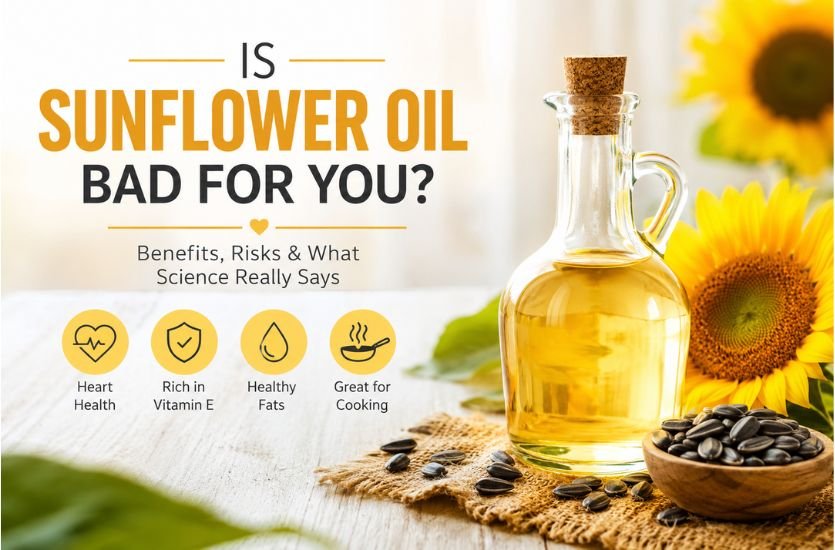
Is Sunflower Oil Bad for You? The Truth About Health Benefits, Risks, and What Science Really Says

Walk through any grocery store, and you’ll find sunflower oil in everything from cooking oils and salad dressings to chips, frozen meals, and baked goods. At the same time, social media and online discussions have sparked heated debates about seed oils, leaving many people wondering whether sunflower oil deserves a place in a healthy diet or should be avoided altogether. Conflicting opinions have made it difficult to separate facts from myths, especially when headlines often oversimplify complex nutrition science.
Also Read: Elektro Team
The reality is that sunflower oil is neither a miracle food nor a dangerous ingredient. Its impact on your health depends on the type of sunflower oil you use, how it is processed, how you cook with it, and the overall quality of your diet. Scientific research shows that certain varieties of sunflower oil can support heart health and provide valuable nutrients, while excessive consumption of highly processed foods containing refined sunflower oil may not be the healthiest choice.
This comprehensive guide explores whether sunflower oil is bad for you, explains its nutritional value, discusses its benefits and potential drawbacks, compares it with other popular cooking oils, and helps you make informed decisions based on current scientific evidence.
What Is Sunflower Oil?
Sunflower oil is a vegetable oil extracted from the seeds of the sunflower plant (Helianthus annuus). It has become one of the world’s most widely used cooking oils because of its mild flavor, affordability, and versatility. Unlike oils with strong tastes, sunflower oil blends well into a variety of dishes without changing their natural flavor.
Manufacturers use sunflower oil in countless food products, including baked goods, snacks, margarine, sauces, dressings, and fried foods. Home cooks also appreciate its ability to perform well in sautéing, roasting, baking, and light frying.
Although sunflower oil is often discussed as if it were a single product, several different varieties exist. Understanding these differences is essential because each type contains a unique balance of fatty acids that influences both its nutritional value and cooking performance.
The Different Types of Sunflower Oil
One of the biggest misconceptions is that all sunflower oil is identical. In reality, sunflower oil is produced in several varieties with different fatty acid compositions.
High-oleic sunflower oil contains a high percentage of monounsaturated fats, making it more stable during cooking and generally considered the healthiest option. It is commonly recommended for higher-temperature cooking because it resists oxidation better than other varieties.
Mid-oleic sunflower oil provides a balance between monounsaturated and polyunsaturated fats, making it suitable for everyday cooking and food preparation.
High-linoleic sunflower oil contains significantly higher amounts of omega-6 polyunsaturated fats. While these fats are essential nutrients, this variety is less stable when exposed to prolonged high heat.
There is also high-stearic high-oleic sunflower oil, primarily used by food manufacturers because of its excellent stability and longer shelf life.
Knowing which type you’re purchasing can help you choose the most suitable oil for your cooking needs.
Nutritional Profile of Sunflower Oil
Sunflower oil is composed almost entirely of fat, providing approximately 120 calories per tablespoon. While this may seem high, fats are an essential part of a balanced diet and play important roles in hormone production, nutrient absorption, and cellular function.
One of sunflower oil’s most valuable nutrients is vitamin E, a powerful antioxidant that helps protect cells from oxidative damage. A single tablespoon can provide a significant portion of the recommended daily intake of vitamin E.
The oil contains relatively low amounts of saturated fat compared to butter, coconut oil, and animal fats. Instead, it provides varying amounts of monounsaturated and polyunsaturated fats depending on the variety.
These healthy fats have been associated with improved cholesterol levels and cardiovascular health when they replace saturated fats in the diet.
Is Sunflower Oil Healthy?
The answer depends largely on how it is consumed.
Research suggests that replacing saturated fats with unsaturated vegetable oils, including sunflower oil, may improve heart health. This is because unsaturated fats can help reduce low-density lipoprotein (LDL), commonly known as “bad” cholesterol, while supporting healthy blood vessels.
Sunflower oil also supplies vitamin E, which contributes to immune function, skin health, and protection against oxidative stress. Vitamin E works by neutralizing free radicals that can damage cells over time.
However, sunflower oil should not be viewed as a superfood. Like any cooking oil, it is calorie-dense and should be consumed in moderation. Its health benefits are most noticeable when it replaces less healthy fats rather than simply adding extra calories to the diet.
Why Some People Believe Sunflower Oil Is Bad for You
Concerns about sunflower oil have increased due to growing criticism of seed oils. Many online articles and social media influencers claim that sunflower oil causes inflammation, heart disease, obesity, or other chronic illnesses.
These claims often focus on sunflower oil’s omega-6 fatty acid content. While omega-6 fats are essential nutrients, critics argue that modern diets contain excessive amounts of them compared with omega-3 fats.
Although maintaining a healthy balance between omega-6 and omega-3 fatty acids is important, current scientific evidence does not support the idea that moderate consumption of sunflower oil alone causes inflammation or disease in healthy individuals.
Experts generally agree that the overall dietary pattern matters far more than a single ingredient. A diet rich in vegetables, fruits, whole grains, lean proteins, nuts, seeds, and healthy fats is likely to provide far greater health benefits than obsessing over one cooking oil.
Does Sunflower Oil Cause Inflammation?
This is perhaps the most common question surrounding sunflower oil.
The belief stems from its high concentration of omega-6 fatty acids, particularly in high-linoleic sunflower oil. Omega-6 fats can participate in biological pathways related to inflammation, but they also serve many essential functions in the body.
Numerous scientific reviews have found little evidence that normal dietary intake of omega-6 fatty acids increases inflammation in healthy people. Instead, replacing saturated fats with unsaturated vegetable oils may actually improve several markers of cardiovascular health.
Problems may arise when diets become dominated by highly processed foods that are rich in refined oils, sugar, sodium, and unhealthy calories. In these cases, poor dietary quality—not sunflower oil alone—is usually responsible for adverse health outcomes.
Benefits of Sunflower Oil
Sunflower oil offers several advantages when used appropriately.
Its high vitamin E content helps protect cells from oxidative damage and supports healthy skin and immune function. Antioxidants like vitamin E may also contribute to long-term health by reducing oxidative stress.
The oil’s unsaturated fats can improve cholesterol levels when they replace saturated fats from butter or animal fats. Better cholesterol management contributes to lower cardiovascular risk over time.
Sunflower oil’s neutral taste makes it versatile for baking, roasting, and preparing homemade dressings. Unlike stronger oils, it does not overpower the natural flavors of food.
High-oleic sunflower oil is also relatively stable during cooking, making it suitable for higher-temperature applications compared with traditional high-linoleic sunflower oil.
Potential Drawbacks of Sunflower Oil
Despite its benefits, sunflower oil is not without limitations.
Highly refined sunflower oil may lose some naturally occurring antioxidants during processing. Although refining improves shelf life and stability, it can slightly reduce the concentration of beneficial plant compounds.
Repeatedly heating sunflower oil at very high temperatures may produce oxidation products and harmful compounds. This is especially true when oil is reused multiple times in deep fryers.
Because sunflower oil is calorie-dense, excessive consumption can contribute to weight gain if overall calorie intake exceeds energy expenditure.
Some processed foods containing sunflower oil are also high in added sugar, refined carbohydrates, and sodium. In these situations, blaming sunflower oil alone overlooks the broader nutritional concerns associated with ultra-processed foods.
Is Refined Sunflower Oil Bad?
Refined sunflower oil often receives criticism, but refinement itself is not necessarily harmful.
The refining process removes impurities, improves stability, and increases shelf life. It also creates a neutral flavor preferred in commercial food production.
However, cold-pressed sunflower oil retains more naturally occurring antioxidants and plant compounds because it undergoes minimal processing.
Both refined and cold-pressed sunflower oils can fit into a healthy diet, although cold-pressed varieties may be preferable for salad dressings and low-temperature cooking, while refined oils are generally more suitable for cooking at moderate temperatures.
Is Sunflower Oil Safe for Frying?
The answer depends on the specific variety.
High-oleic sunflower oil performs well at higher temperatures because its monounsaturated fats are more resistant to oxidation.
Traditional high-linoleic sunflower oil is less stable during prolonged heating and repeated frying.
Regardless of the oil used, repeatedly reusing cooking oil is not recommended. Continuous exposure to high temperatures accelerates oxidation and the formation of undesirable compounds that may negatively affect health.
For everyday home cooking, using fresh oil and avoiding overheating are simple ways to reduce these risks.
Sunflower Oil vs Olive Oil
Olive oil is widely regarded as one of the healthiest cooking oils due to its abundance of monounsaturated fats and antioxidant-rich polyphenols.
Sunflower oil also provides healthy unsaturated fats and significant amounts of vitamin E, but most varieties contain fewer natural antioxidants than extra virgin olive oil.
Olive oil is often preferred for salads and Mediterranean-style cooking because of its distinctive flavor and well-established cardiovascular benefits.
Sunflower oil, on the other hand, offers a lighter taste that works well in baking, frying, and recipes where a neutral flavor is desired.
Both oils can play valuable roles in a balanced diet when used appropriately.
Sunflower Oil vs Canola Oil
Canola oil contains a more favorable balance of omega-3 and omega-6 fatty acids, making it an attractive option for many households.
Sunflower oil provides considerably more vitamin E and is often preferred for recipes requiring a clean, neutral taste.
High-oleic sunflower oil and canola oil are both excellent choices for everyday cooking. The better option often depends on personal taste, cooking style, and nutritional priorities.
Choosing the Healthiest Sunflower Oil
When shopping, high-oleic sunflower oil is generally the best choice because it contains more heart-healthy monounsaturated fats and greater heat stability.
Cold-pressed sunflower oil may appeal to those seeking minimal processing, while refined high-oleic sunflower oil is practical for everyday cooking.
Reading product labels can help identify the oil variety, processing method, and intended cooking applications.
Combining sunflower oil with other healthy fats such as olive oil, avocado oil, nuts, seeds, and fatty fish also promotes better dietary balance.
Should You Avoid Sunflower Oil?
For most healthy individuals, there is no compelling scientific reason to completely eliminate sunflower oil.
Moderate consumption of high-quality sunflower oil as part of a balanced diet is generally considered safe and may even provide cardiovascular benefits when it replaces saturated fats.
People should instead focus on limiting ultra-processed foods, eating more whole foods, increasing fiber intake, consuming adequate omega-3 fatty acids, and maintaining an overall nutritious dietary pattern.
If you have specific medical conditions or dietary restrictions, consulting a registered dietitian or healthcare provider can help determine the most appropriate cooking oils for your individual needs.
Final Verdict
So, is sunflower oil bad for you? Current scientific evidence suggests the answer is generally no. Sunflower oil can be a healthy addition to your diet when consumed in moderation, particularly if you choose high-oleic varieties and use them appropriately for cooking. It provides beneficial unsaturated fats, significant amounts of vitamin E, and versatility in the kitchen.
The concerns surrounding sunflower oil often stem from misunderstandings about seed oils or from diets that rely heavily on highly processed foods rather than the oil itself. While excessive consumption of refined foods, repeated deep frying, and poor dietary habits can contribute to health problems, sunflower oil alone is unlikely to be the cause.
Rather than viewing sunflower oil as either entirely good or completely bad, it is more accurate to consider it one component of an overall healthy eating pattern. Choosing high-quality oils, cooking wisely, eating plenty of whole foods, and maintaining a balanced lifestyle will have a far greater impact on your long-term health than avoiding sunflower oil altogether.