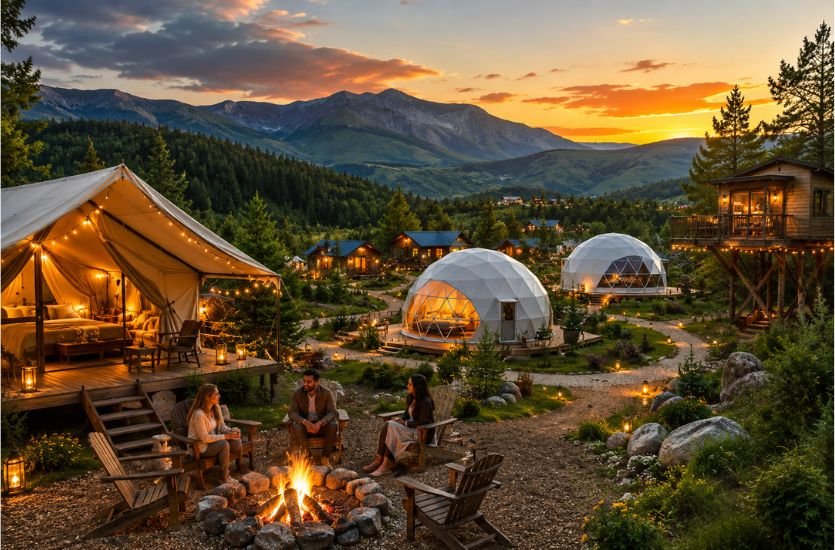

The sound of birds at sunrise, fresh mountain air, and a cozy king-size bed inside a beautifully designed canvas tent were once considered an unlikely combination. Today, that blend of wilderness and luxury has become one of the fastest-growing segments of the global travel industry. Travelers are no longer satisfied with choosing between rough camping and expensive hotels. Instead, they are embracing experiences that combine comfort, sustainability, and a deeper connection with nature. This shift has given rise to the glamping economy, a dynamic market that is transforming tourism, hospitality, and rural development around the world.
Also Read: GPlus Games
Glamping, a term created by combining the words “glamorous” and “camping,” has evolved from a niche travel concept into a billion-dollar industry. Luxury tents, treehouses, geodesic domes, eco-lodges, tiny cabins, and unique outdoor accommodations now attract millions of travelers seeking memorable experiences rather than traditional vacations. As demand continues to rise, the glamping economy is creating new business opportunities, supporting local communities, encouraging sustainable tourism, and redefining what modern travelers expect from outdoor adventures.
Understanding the Glamping Economy
The glamping economy refers to the entire economic ecosystem surrounding luxury outdoor accommodations and related services. It includes accommodation providers, construction companies, tourism operators, booking platforms, renewable energy suppliers, outdoor furniture manufacturers, hospitality businesses, local artisans, transportation services, and adventure activity providers.
Unlike traditional camping, where visitors often bring their own tents and equipment, glamping offers ready-made accommodations equipped with comfortable beds, stylish interiors, electricity, heating or cooling systems, private bathrooms, and sometimes even hot tubs or gourmet dining experiences. This approach removes many of the inconveniences associated with camping while preserving the beauty and tranquility of natural surroundings.
The industry’s growth reflects a broader shift in consumer behavior. Instead of spending money solely on luxury goods, many people now prioritize meaningful experiences that create lasting memories. Staying in a luxury dome beneath a star-filled sky or waking up in a treehouse overlooking a forest offers a level of uniqueness that conventional hotels often cannot match.
The Evolution of Luxury Camping
Camping itself has existed for centuries, primarily as a recreational activity focused on simplicity and adventure. However, luxury camping has historical roots dating back to royal hunting expeditions and luxury safari camps in Africa, where wealthy travelers enjoyed elegant accommodations in remote wilderness settings.
Modern glamping emerged during the early 2000s as tourism operators recognized growing demand for nature-based experiences without sacrificing comfort. Boutique resorts began offering luxury canvas tents with hotel-quality amenities, while architects introduced innovative structures such as geodesic domes, eco-pods, floating cabins, and designer treehouses.
Social media significantly accelerated this trend. Stunning photographs of stylish outdoor accommodations quickly spread across Instagram, Pinterest, and travel blogs, inspiring travelers to seek visually appealing destinations. Today, many glamping sites are intentionally designed to be both comfortable and highly photogenic, making them attractive to content creators and digital travelers.
Why the Glamping Economy Is Growing Rapidly
Several powerful trends are driving the continued expansion of the glamping economy across different regions of the world.
One of the most important factors is the growing demand for experience-based travel. Modern tourists increasingly seek authentic adventures that allow them to connect with local cultures, landscapes, and wildlife rather than simply visiting crowded tourist attractions. Glamping provides exactly this combination by offering immersive outdoor experiences with premium comfort.
Environmental awareness also plays a major role. Many travelers prefer accommodations that emphasize sustainability through renewable energy, environmentally friendly construction materials, water conservation systems, and responsible waste management. Properly managed glamping sites often leave a smaller environmental footprint than large hotels while encouraging guests to appreciate natural environments.
The rise of remote work has further expanded the industry’s potential. Professionals who can work from anywhere increasingly choose scenic destinations where they can balance productivity with relaxation. Reliable internet access, comfortable workspaces, and peaceful surroundings make many glamping properties attractive options for extended workations.
Changing family travel preferences have also contributed to market growth. Parents often seek vacations that encourage children to spend more time outdoors while still enjoying modern conveniences. Luxury camping provides opportunities for hiking, wildlife observation, campfires, and outdoor recreation without requiring families to invest in expensive camping equipment or outdoor expertise.
The Global Market Outlook
The global glamping market has experienced remarkable expansion over the past decade, with industry analysts projecting continued growth throughout the coming years. North America and Europe remain among the largest markets, supported by well-established outdoor recreation cultures and high consumer spending on leisure travel.
Asia-Pacific has emerged as one of the fastest-growing regions, driven by rising disposable incomes, expanding domestic tourism, and increasing interest in luxury outdoor experiences. Countries with diverse natural landscapes are seeing new investments in eco-resorts, mountain retreats, and coastal glamping destinations.
Investors are increasingly attracted to the industry because glamping properties often require lower development costs than large hotels while offering premium pricing opportunities. Their flexibility also allows operators to expand gradually by adding additional accommodations as demand increases.
Types of Glamping Accommodations
One of the reasons behind the industry’s popularity is the incredible diversity of accommodation options available.
Luxury safari tents remain among the most recognizable forms of glamping. These spacious canvas structures often feature wooden flooring, private bathrooms, elegant furnishings, and outdoor decks overlooking scenic landscapes.
Geodesic domes have become increasingly popular due to their distinctive architectural design and panoramic windows that allow guests to enjoy breathtaking views while remaining protected from the elements.
Treehouses provide elevated accommodations surrounded by forests, creating a sense of adventure combined with modern luxury. Many feature premium interiors, balconies, and even private hot tubs.
Tiny cabins and eco-lodges appeal to travelers seeking minimalist design combined with sustainability. These accommodations frequently incorporate renewable energy systems, recycled materials, and environmentally responsible construction methods.
Other unique options include yurts, shepherd huts, converted Airstream trailers, floating cabins, luxury RVs, and glass cabins designed specifically for viewing stars or northern lights.
Economic Benefits for Local Communities
The glamping economy generates significant economic benefits beyond individual businesses. Rural communities often experience increased tourism revenue as visitors spend money on restaurants, local markets, transportation services, guided tours, and recreational activities.
Employment opportunities expand across multiple sectors, including hospitality, housekeeping, landscaping, maintenance, construction, food service, marketing, and customer support. Local craftsmen may also benefit by supplying handmade furniture, decorations, artwork, and souvenirs that enhance guest experiences.
Farmers increasingly diversify their income by converting portions of agricultural land into boutique glamping sites while continuing traditional farming activities. Agritourism has become an important segment of the glamping economy, allowing guests to experience rural lifestyles while supporting local agriculture.
These economic activities contribute to rural revitalization by attracting investment into regions that previously relied on seasonal tourism or declining industries.
Technology Transforming the Industry
Technology has become an essential component of successful glamping businesses. Online booking platforms allow travelers to compare accommodations, read reviews, and make instant reservations from anywhere in the world.
Property management software helps operators coordinate reservations, housekeeping schedules, maintenance requests, and guest communications efficiently. Automated pricing systems adjust rates based on seasonal demand, occupancy levels, and local events, maximizing revenue throughout the year.
Smart technology is increasingly integrated into accommodations themselves. Digital locks, contactless check-in systems, energy-efficient lighting, climate control, and mobile guest services improve convenience while reducing operational costs.
Artificial intelligence is beginning to influence marketing strategies by helping businesses personalize promotions, analyze customer preferences, and predict future booking patterns. These innovations enable even small operators to compete effectively in an increasingly digital travel marketplace.
Sustainability at the Heart of Glamping
Sustainability remains one of the defining characteristics of the glamping economy. Many operators design their properties with environmental responsibility as a core business principle rather than simply a marketing feature.
Solar panels, rainwater harvesting systems, composting toilets, recyclable materials, and low-impact construction techniques help minimize ecological footprints. Native landscaping reduces water consumption while preserving local biodiversity.
Many glamping businesses encourage guests to participate in environmental education, wildlife conservation programs, tree planting initiatives, and responsible outdoor recreation. These activities strengthen visitors’ appreciation for natural ecosystems while supporting long-term conservation efforts.
Sustainable tourism practices also benefit local communities by preserving natural attractions that continue attracting visitors for generations.
Changing Traveler Expectations
Today’s glamping guests expect far more than basic outdoor accommodation. Comfortable mattresses, high-quality linens, private bathrooms, reliable Wi-Fi, stylish interior design, and excellent customer service have become standard expectations for premium experiences.
Wellness tourism is becoming increasingly important within the glamping economy. Yoga retreats, meditation sessions, spa treatments, forest bathing experiences, and healthy farm-to-table dining attract travelers seeking physical and mental rejuvenation.
Pet-friendly accommodations have also gained popularity as more travelers prefer vacations that include their animals. Flexible booking policies, personalized guest experiences, and locally inspired activities further enhance customer satisfaction and encourage repeat visits.
The growing popularity of social media continues influencing design choices. Beautiful architecture, scenic viewpoints, outdoor bathtubs, fire pits, and carefully curated interiors help properties stand out in an increasingly competitive market.
Challenges Facing the Glamping Industry
Despite its impressive growth, the glamping economy faces several challenges that operators must carefully manage.
Seasonal demand remains a significant concern in regions with harsh winters or extreme weather conditions. Many businesses experience fluctuating occupancy rates throughout the year, making effective financial planning essential.
Initial investment costs can also be substantial. Land acquisition, infrastructure development, utility installation, premium furnishings, and environmental compliance require significant capital before operations begin generating revenue.
Regulatory requirements vary between countries and local governments, with zoning laws, environmental permits, and safety standards sometimes creating obstacles for new developments.
Competition has intensified as more entrepreneurs enter the market. Success increasingly depends on offering distinctive experiences, exceptional service, and strong branding rather than simply providing attractive accommodations.
Climate change presents additional long-term risks, including increased wildfire threats, flooding, severe storms, and unpredictable weather patterns that may disrupt tourism seasons.
Business Opportunities for Entrepreneurs
The continued expansion of the glamping economy creates numerous opportunities for entrepreneurs and investors.
Property developers can establish boutique glamping resorts that target luxury travelers seeking unique accommodations. Existing farms and rural properties may diversify income by adding carefully designed glamping facilities.
Manufacturers of luxury tents, modular cabins, eco-friendly construction materials, solar energy systems, outdoor furniture, and hospitality equipment all benefit from rising industry demand.
Digital businesses also play an important role through specialized booking platforms, travel marketing agencies, guest experience software, and tourism consulting services.
Adventure tourism operators can collaborate with glamping sites to offer guided hiking, kayaking, cycling, wildlife safaris, cultural tours, photography workshops, and wellness programs that increase guest spending while enriching travel experiences.
The Future of the Glamping Economy
The future of the glamping economy appears exceptionally promising as global travel continues evolving toward sustainability, personalization, and meaningful experiences. Consumer preferences increasingly favor destinations that combine luxury with environmental responsibility, allowing travelers to reconnect with nature without sacrificing comfort.
Technological innovation will continue improving operational efficiency and guest satisfaction through smarter accommodations, personalized services, and enhanced digital experiences. At the same time, greater emphasis on eco-friendly development will encourage responsible growth that protects natural landscapes while supporting local communities.
As younger generations place greater value on experiences over possessions, demand for memorable outdoor stays is expected to remain strong. Wellness tourism, remote work flexibility, family adventure travel, and eco-conscious lifestyles are likely to reinforce the industry’s long-term expansion.
The glamping economy represents far more than a passing travel trend. It reflects a broader transformation in how people define luxury, leisure, and meaningful travel. By blending comfort with adventure, technology with sustainability, and business growth with environmental stewardship, glamping has established itself as one of the most innovative sectors in modern tourism. For travelers, entrepreneurs, and rural communities alike, the glamping economy offers opportunities that extend well beyond a night spent beneath the stars, creating lasting value for both people and the places they explore.