марии склодовской кюри: The Extraordinary Life, Discoveries, Nobel Prizes, and Scientific Legacy

History remembers only a handful of individuals whose discoveries permanently changed humanity’s understanding of the universe. Among those remarkable pioneers stands марии склодовской кюри, a scientist whose relentless curiosity, determination, and brilliance transformed the fields of physics, chemistry, and medicine. Her groundbreaking work on radioactivity not only reshaped modern science but also paved the way for innovations that continue to save millions of lives through cancer treatments, medical imaging, and nuclear research.
Also Read: Pedrovazpaulo: Business Consulting, Leadership Strategy and Growth Solutions
The story of марии склодовской кюри is far more than a tale of scientific success. It is the story of a young woman who overcame poverty, discrimination, political oppression, and personal tragedy to become one of history’s greatest scientists. She was the first woman to win a Nobel Prize, the first person ever to receive two Nobel Prizes, and remains the only individual to earn Nobel Prizes in two different scientific disciplines—Physics and Chemistry.
Today, her achievements continue to inspire students, researchers, and innovators around the world. Universities, research institutes, scholarships, and scientific awards bear her name, reminding future generations that perseverance and passion can overcome even the greatest obstacles.
Who Was марии склодовской кюри?
марии склодовской кюри, internationally known as Marie Curie, was a Polish-born physicist and chemist whose pioneering studies of radioactive materials revolutionized science. Born as Maria Salomea Skłodowska on November 7, 1867, in Warsaw, Poland, she later became a naturalized French citizen after moving to Paris to continue her education.
During a period when women faced significant barriers to higher education and scientific careers, Marie Curie refused to accept society’s limitations. Instead, she dedicated her life to understanding the mysterious energy emitted by certain elements, laying the foundation for entirely new branches of scientific research.
Her discoveries fundamentally changed how scientists viewed atoms and matter. At a time when atoms were believed to be indivisible, her research demonstrated that they possessed internal properties capable of releasing immense amounts of energy.
Early Life in Poland
The childhood of марии склодовской кюри was shaped by both intellectual encouragement and political hardship. She grew up in Warsaw during a period when Poland was under Russian control. Polish culture and education were heavily restricted, creating significant challenges for ambitious young students.
Her parents were educators who deeply valued learning despite facing financial struggles. Her father taught mathematics and physics, while her mother served as the headmistress of a respected girls’ school. Their commitment to education inspired Maria from an early age, encouraging her natural curiosity about mathematics and science.
Life was not easy for the family. Financial difficulties, combined with political repression, made access to quality education increasingly challenging. Personal tragedy also struck during Maria’s childhood when her mother died from tuberculosis, followed by the loss of one of her sisters. These heartbreaking events strengthened her resilience and determination to succeed.
Even as a young student, Maria displayed exceptional academic talent. She excelled in mathematics, physics, and languages, consistently ranking among the top students despite limited educational opportunities for women.
The Challenge of Higher Education
One of the greatest obstacles facing марии склодовской кюри was the simple fact that women were not permitted to attend universities in Russian-controlled Poland. This discrimination forced many talented women to abandon their academic ambitions or seek education abroad.
Rather than giving up, Maria joined the “Flying University,” a secret educational organization that offered underground classes in science, literature, and philosophy. These hidden lectures allowed Polish students to pursue higher education despite government restrictions.
Recognizing that studying overseas required financial resources, Maria made an extraordinary sacrifice. She worked for several years as a governess, teaching children from wealthy families while saving money to support both herself and her older sister Bronisława.
The two sisters made an agreement that reflected their close bond and shared determination. Maria financially supported Bronisława’s medical studies in Paris, and once her sister became established, she would help Maria pursue her own education.
This period demanded incredible patience and discipline. Although Maria dreamed of becoming a scientist, she delayed her ambitions for several years, believing that education was worth every sacrifice.
Moving to Paris
In 1891, марии склодовской кюри finally fulfilled her dream by moving to Paris. The transition marked a turning point in her life, opening doors to academic opportunities that had been impossible in her homeland.
She enrolled at the prestigious Sorbonne, officially known as the University of Paris, where she studied physics and mathematics. Life in Paris, however, was far from comfortable.
Maria rented a tiny attic room with minimal heating. During harsh winters, she often endured freezing temperatures while studying late into the night. Food was scarce, and she frequently survived on simple meals consisting of bread, butter, tea, and occasional fruit because she could not afford anything more substantial.
Despite these hardships, her dedication never wavered. She devoted nearly every waking hour to attending lectures, conducting laboratory work, and studying scientific literature.
Her professors quickly recognized her extraordinary abilities. She graduated at the top of her class in physics and later earned another degree in mathematics, establishing herself as one of the university’s brightest students.
Her academic excellence attracted the attention of leading scientists throughout France, opening opportunities for research that would eventually change the world.
Passion for Scientific Research
Unlike many students who viewed education as a path to financial stability, марии склодовской кюри was motivated by a genuine passion for discovery. She believed that science existed to uncover truths about nature and improve humanity’s understanding of the world.
Her earliest research focused on magnetism and the physical properties of different materials. Working in modest laboratory conditions, she demonstrated remarkable precision in experimental design and measurement.
Scientific research during the late nineteenth century required extraordinary patience. Experiments often lasted months or even years before producing meaningful results. Marie embraced this challenge, carefully recording observations and repeating experiments until she achieved reliable conclusions.
Her disciplined approach would later become one of the defining characteristics of her career.
Meeting Pierre Curie
One of the most significant moments in the life of марии склодовской кюри came when she met French physicist Pierre Curie in 1894.
Pierre was already respected within the scientific community for his work on crystallography and magnetism. Friends introduced the two researchers because they shared similar scientific interests.
Their relationship quickly developed through mutual admiration rather than romance alone. Both valued intellectual curiosity, modest living, and a lifelong commitment to scientific discovery.
Pierre recognized Marie’s exceptional intelligence almost immediately. Unlike many men of the era, he treated her as an equal scientific partner, encouraging her ambitious research rather than discouraging it.
The couple married in 1895 in a simple ceremony that reflected their practical personalities. Instead of purchasing expensive wedding attire, Marie wore a dark blue dress that she continued wearing during laboratory work for many years afterward.
Their marriage became one of history’s greatest scientific partnerships. Together, they spent countless hours conducting experiments in challenging laboratory conditions, united by a shared determination to expand human knowledge.
The collaboration between Marie and Pierre Curie would soon lead to discoveries that forever changed physics, chemistry, and medicine, establishing марии склодовской кюри as one of the most influential scientists the world has ever known.
The partnership between марии склодовской кюри and Pierre Curie soon evolved into one of the most productive collaborations in scientific history. Working under difficult conditions with limited funding and outdated equipment, the couple pursued questions that many scientists of the time considered mysterious or even impossible to answer. Their determination, patience, and precision would ultimately lead to discoveries that transformed modern physics, chemistry, and medicine.
The Beginning of Radioactivity Research
In 1896, French physicist Henri Becquerel discovered that uranium emitted invisible rays capable of exposing photographic plates without sunlight. Although this observation attracted scientific interest, the exact nature of these mysterious rays remained unknown.
Marie Curie saw an opportunity to investigate the phenomenon in greater depth. Choosing the subject for her doctoral research, she began measuring the radiation emitted by uranium using an extremely sensitive electrometer that Pierre Curie had helped develop.
Her careful experiments revealed something remarkable. The intensity of the radiation depended solely on the amount of uranium present and not on its chemical form. This meant that the mysterious energy came directly from the atoms themselves rather than from chemical reactions.
This revolutionary conclusion challenged long-held scientific beliefs. At the time, atoms were considered indivisible and stable. Marie’s findings suggested that atoms possessed internal properties capable of releasing energy, opening the door to an entirely new understanding of matter.
To describe this natural phenomenon, марии склодовской кюри introduced the scientific term “radioactivity.” The word would soon become one of the most important concepts in modern science.
The Discovery of Polonium
As Marie continued her experiments, she noticed that certain uranium ores produced far more radiation than pure uranium itself. This unexpected observation suggested that the ores contained another unknown element with even stronger radioactive properties.
Working side by side, Marie and Pierre analyzed enormous quantities of pitchblende, a uranium-rich mineral. Their research demanded exceptional patience because isolating new elements required processing tons of material through repeated chemical procedures.
In July 1898, the couple announced the discovery of a previously unknown chemical element.
Marie named it Polonium in honor of her homeland, Poland, which at that time did not exist as an independent nation. The decision reflected both her scientific achievement and her enduring love for the country where she was born.
Although the amount of polonium extracted was extremely small, its discovery represented a historic milestone in chemistry and demonstrated the remarkable accuracy of Marie’s research methods.
The Discovery of Radium
Only a few months after identifying polonium, марии склодовской кюри and Pierre Curie made another extraordinary breakthrough.
They discovered a second new element that displayed even stronger radioactive properties than polonium. This element became known as Radium.
Extracting radium proved to be an enormous scientific challenge. The Curies processed several tons of pitchblende inside a modest laboratory that lacked modern equipment, ventilation, and safety measures.
Day after day, they stirred boiling chemical mixtures in large iron containers, carried heavy materials by hand, and performed thousands of precise measurements. The work was physically exhausting and often took place in uncomfortable conditions.
Years of persistence finally paid off when Marie succeeded in isolating pure radium compounds, allowing scientists to study the element’s unique properties for the first time.
The glowing appearance of radium fascinated researchers around the world, although its dangerous health effects were not yet fully understood.
Countless Hours of Laboratory Work
Unlike many scientific breakthroughs that occur through sudden inspiration, the achievements of марии склодовской кюри resulted from relentless effort over many years.
Her laboratory was simple and often uncomfortable. The building leaked during rainstorms, became unbearably cold during winter, and lacked proper heating and ventilation. Modern laboratory safety standards did not exist, meaning researchers handled radioactive materials with little protection.
Marie frequently worked from early morning until late at night, recording every observation with exceptional accuracy. She believed that scientific progress depended not on luck but on careful experimentation, patience, and honesty.
Her notebooks from this period remain radioactive even today because of prolonged exposure to radium and other radioactive materials. These documents continue to be preserved under special protective conditions.
Recognition from the Scientific Community
Initially, many scientists questioned Marie’s conclusions because they challenged established theories about atoms.
However, repeated experiments conducted by researchers across Europe confirmed her findings. The scientific community gradually recognized that her discoveries represented one of the most significant advances in physics and chemistry.
Universities, laboratories, and research institutions began investigating radioactivity, leading to entirely new fields of study.
Marie Curie’s research inspired generations of scientists who later contributed to nuclear physics, atomic theory, and medical radiation technologies.
The First Nobel Prize
The revolutionary work of марии склодовской кюри, Pierre Curie, and Henri Becquerel attracted worldwide attention.
In 1903, the Nobel Committee awarded them the Nobel Prize in Physics for their pioneering research into radiation phenomena.
This achievement was historic for several reasons.
Marie became the first woman ever to receive a Nobel Prize, breaking barriers that had prevented women from receiving equal recognition in science.
Interestingly, historical records indicate that Marie’s name was initially omitted from the list of nominees. Only after members of the scientific community insisted that her contributions were equal to Pierre’s did the Nobel Committee officially include her.
The award transformed Marie Curie into an internationally recognized scientist while inspiring women across the world to pursue careers in research.
Personal Tragedy
Only a few years after receiving the Nobel Prize, tragedy struck.
In 1906, Pierre Curie was killed in a street accident in Paris after being struck by a horse-drawn carriage.
His sudden death devastated Marie personally and professionally. She had lost not only her husband but also her closest collaborator and lifelong friend.
Many expected her scientific career to end.
Instead, марии склодовской кюри demonstrated extraordinary resilience.
She accepted Pierre’s teaching position at the Sorbonne, becoming the first female professor in the university’s history.
Rather than abandoning their shared research, she continued expanding it with even greater determination.
The Second Nobel Prize
Marie Curie’s independent research continued producing remarkable results.
Her successful isolation of pure radium and detailed investigations into radioactive elements earned international admiration.
In 1911, she received the Nobel Prize in Chemistry.
The award recognized her discovery of radium and polonium, her isolation of radium, and her extensive investigations into the properties of radioactive substances.
With this achievement, марии склодовской кюри became the first person in history to win two Nobel Prizes.
Even more remarkably, the awards came in two entirely different scientific disciplines—Physics and Chemistry—a distinction that remains exceptionally rare.
Contributions During World War I
When World War I began in 1914, Marie Curie redirected her scientific knowledge toward humanitarian service.
Understanding the importance of medical imaging for wounded soldiers, she helped develop portable X-ray units that could be transported directly to battlefields.
These mobile medical stations became known as the “Little Curies.”
Marie personally organized their production, trained technicians, instructed nurses in operating X-ray equipment, and even drove some of the vehicles herself.
Thousands of injured soldiers benefited from rapid diagnosis of broken bones, bullet wounds, and internal injuries that previously would have been difficult or impossible to detect.
Her wartime efforts demonstrated that scientific discoveries could directly improve human lives during times of crisis.
By the end of the war, hundreds of hospitals had adopted radiological techniques inspired by her work, permanently changing emergency medicine and military healthcare.
Founding Scientific Institutions
Following her remarkable discoveries, марии склодовской кюри devoted much of her later career to building institutions that would continue advancing scientific research long after her own work had ended. She believed that science should never depend on a single individual but instead flourish through collaboration, education, and shared knowledge.
One of her greatest achievements outside the laboratory was helping establish what later became the Curie Institute in Paris. The institute was created to promote advanced research in physics, chemistry, biology, and medicine while developing practical applications for radioactive materials. Over the decades, it has grown into one of the world’s leading centers for cancer research and treatment.
Marie also encouraged young scientists from many countries to pursue careers in research. She welcomed students regardless of their background, believing that talent and dedication mattered more than wealth or social status. Her laboratory became a place where curiosity was valued above personal recognition, creating an environment that inspired future generations of researchers.
Dedication to Science Above Fame
Although марии склодовской кюри became internationally famous, she never allowed recognition to distract her from scientific work. Unlike many celebrated figures of her time, she lived a modest lifestyle and remained deeply committed to research.
She declined opportunities to profit from her discoveries. Perhaps the most remarkable example of her generosity was her decision not to patent the process for isolating radium. She believed that scientific knowledge belonged to humanity and that researchers everywhere should have access to information that could improve lives.
This decision allowed scientists across the world to continue studying radioactive materials without legal or financial barriers, accelerating progress in medicine and physics.
Marie often stated that scientific work should benefit society rather than enrich individuals. Her philosophy continues to influence researchers who believe that collaboration is essential for solving humanity’s greatest challenges.
Health Risks of Radioactivity
During the early years of radioactivity research, scientists had little understanding of the dangers associated with prolonged exposure to radiation. Like many researchers of her era, марии склодовской кюри handled radioactive materials directly with almost no protective equipment.
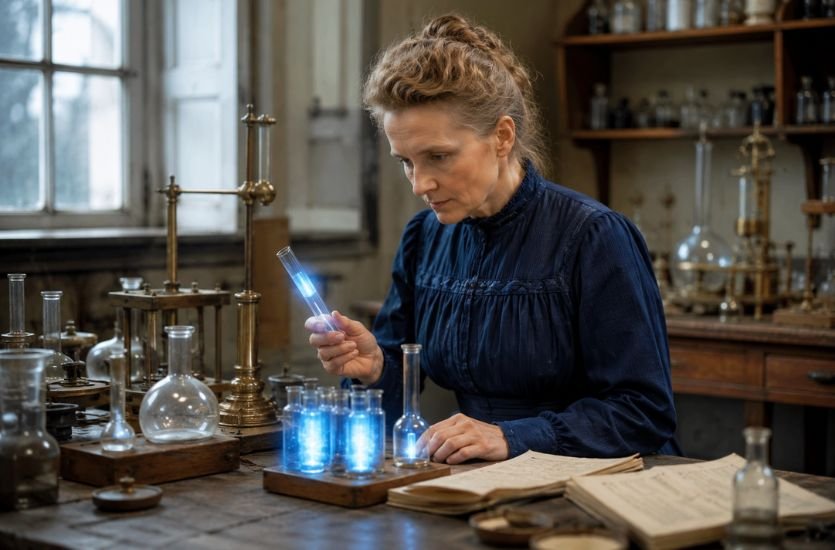
She frequently carried small samples of radium in her pockets and kept glowing test tubes on her laboratory desk because she found their faint blue light fascinating. At the time, the harmful biological effects of radiation were not yet fully understood.
Years of continuous exposure gradually damaged her health. Although her discoveries revolutionized medicine, the same invisible forces she studied eventually affected her own body.
Marie Curie died on July 4, 1934, from aplastic anemia, a serious disease of the bone marrow that is widely believed to have resulted from long-term radiation exposure during her scientific career.
Her death highlighted the importance of laboratory safety and inspired future improvements in radiation protection for researchers, healthcare workers, and patients.
Influence on Modern Medicine
The contributions of марии склодовской кюри extend far beyond academic science. Her discoveries laid the foundation for many medical technologies that are now considered routine.
Radiation therapy, one of the most effective treatments for many forms of cancer, grew directly from the understanding of radioactive materials developed through her research. Millions of patients have benefited from treatments that trace their origins to her pioneering work.
Medical imaging has also advanced because of her contributions. Techniques involving X-rays and radioactive tracers allow physicians to diagnose illnesses more accurately and treat patients earlier than ever before.
In addition, her research helped establish the field of nuclear medicine, where carefully controlled radioactive substances are used to detect diseases, evaluate organ function, and deliver targeted therapies.
Although technology has evolved dramatically since Marie Curie’s time, many modern medical procedures still rely on principles first explored through her investigations.
A Lasting Scientific Legacy
Few scientists have influenced as many disciplines as марии склодовской кюри. Her work reshaped chemistry by introducing new radioactive elements, transformed physics through the study of atomic behavior, and revolutionized medicine through practical applications of radiation.
Today, her legacy can be found in universities, laboratories, hospitals, research centers, and educational programs across the globe.
Numerous scholarships, scientific awards, research grants, and academic institutions bear her name. The Curie Institute continues conducting world-class research in oncology and biomedical science, while international organizations support young researchers through programs inspired by her achievements.
Even the unit of radioactivity known as the “curie,” although largely replaced in scientific measurements by the becquerel, stands as a reminder of her enormous contribution to science.
Her influence extends beyond laboratories. She became a symbol of perseverance, intellectual honesty, and equality in education, encouraging women to pursue careers in science, technology, engineering, and mathematics.
Interesting Facts About марии склодовской кюри
The life of марии склодовской кюри includes many fascinating details that continue to capture public imagination. She was the first woman ever awarded a Nobel Prize and the first person in history to receive two Nobel Prizes in different scientific disciplines. Her daughter, Irène Joliot-Curie, later won a Nobel Prize in Chemistry, making the Curie family one of the most celebrated scientific families in history.
Marie was also the first female professor at the Sorbonne, breaking another significant barrier for women in higher education. Despite achieving worldwide fame, she remained humble and devoted most of her time to research rather than public attention.
One of the most unusual facts about her life is that her laboratory notebooks, personal papers, and even some of her belongings remain radioactive today. Because of this, they are stored in specialized lead-lined containers, and researchers must wear protective equipment to examine them.
Why Marie Curie Still Inspires the World
More than a century after her greatest discoveries, марии склодовской кюри continues to inspire people from every corner of the globe. Students admire her determination, scientists respect her meticulous methods, and historians recognize her role in changing society’s expectations of women in science.
Her story demonstrates that remarkable achievements often arise from persistence rather than privilege. She faced financial hardship, discrimination, political oppression, and personal loss, yet none of these obstacles prevented her from pursuing knowledge.
Marie Curie believed that science should serve humanity. This guiding principle remains just as relevant today as researchers work to address global challenges in health, energy, environmental protection, and technology.
Frequently Asked Questions
Who was марии склодовской кюри?
марии склодовской кюри, known internationally as Marie Curie, was a Polish-born physicist and chemist whose pioneering research on radioactivity transformed modern science and medicine.
What did марии склодовской кюри discover?
She discovered the chemical elements polonium and radium, introduced the concept of radioactivity, and conducted groundbreaking research that laid the foundation for nuclear physics and radiochemistry.
How many Nobel Prizes did марии склодовской кюри win?
She won two Nobel Prizes—the Nobel Prize in Physics in 1903 and the Nobel Prize in Chemistry in 1911.
Why is марии склодовской кюри important?
Her discoveries revolutionized physics, chemistry, and medicine, leading to advancements in cancer treatment, medical imaging, and scientific research that continue to benefit humanity today.
How did марии склодовской кюри die?
She died in 1934 from aplastic anemia, a disease believed to have been caused by prolonged exposure to ionizing radiation during her years of scientific research.
Conclusion
The extraordinary journey of марии склодовской кюри stands as one of the greatest success stories in the history of science. From her modest beginnings in Warsaw to becoming one of the world’s most celebrated researchers, she demonstrated that curiosity, perseverance, and dedication can overcome even the most formidable obstacles.
Her discoveries forever changed humanity’s understanding of matter and energy, opening new frontiers in physics, chemistry, and medicine. The hospitals that treat cancer, the laboratories exploring atomic science, and the researchers developing life-saving technologies all owe a debt to the pioneering work she began more than a century ago.
Beyond her scientific accomplishments, Marie Curie left a powerful human legacy. She proved that knowledge should be shared, that education should be accessible, and that determination can break barriers that once seemed impossible to overcome. As new generations continue exploring the mysteries of the universe, the life and achievements of марии склодовской кюри remain a timeless reminder that one person’s passion for discovery can change the world forever.